Flexible 3D printing filament


 Filament
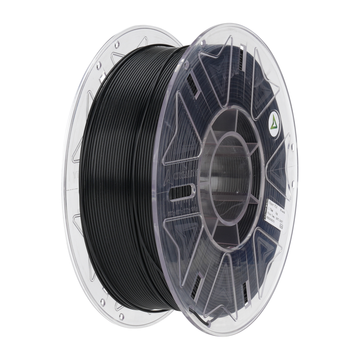
CREALITY RFID PLA FILAMENT HYPER BLACK 1.75 MM 1 KG
● 390 stuks op voorraad

Imagine being able to create something that is flexible and impact-resistant, without it being difficult or expensive to produce. With modern 3D printing technology, this is possible, especially when you use TPU 3D filament. TPU, which stands for thermoplastic polyurethane, has special properties and can be used in many ways. At AC PRODUCTS, we see more and more customers becoming interested in TPU because it offers a good balance between hard plastics and rubber materials. With the right knowledge and equipment, you can create many different designs, such as protective covers and seals, as well as functional parts for various purposes and industries.
TPU is highly suitable for projects where flexibility and wear resistance are important. It feels almost like rubber, but it is sturdy enough not to deform during daily use. That is why TPU 3D filament is a great choice when you need a part that doesn't break easily but is still sufficiently pliable.
TPU is also less prone to cracking due to its unique chemical composition. As a result, it performs well under demanding conditions. Think of parts for sporting goods, shock-absorbing components in the automotive sector, or applications in the medical world, where comfort and safety are important.
The versatility of TPU makes it an interesting material to consider when you are looking for a filament that suits your creative or professional projects.
Besides flexibility and wear resistance, TPU has another important property: it absorbs shocks and vibrations better than many other materials. This helps your final product last longer, even if it is used frequently.
When printing TPU filament, it usually adheres well to the print bed, provided you set the correct temperature and ensure the surface is clean and flat. This reduces the chance of corners lifting or edges warping, which are problems that occur more frequently with other filaments.
An additional advantage is that TPU produces little odor and fumes during printing, leading to a pleasant work environment. At AC PRODUCTS, we therefore often recommend TPU if you are looking for a good combination of flexibility, durability, and ease of use.
TPU 3D filament is surprisingly versatile and can be used for very different projects. Some well-known applications include:
Thanks to this versatility, TPU 3D filament is not only interesting for hobbyists, but it is also receiving increasing attention in the industrial and medical sectors. By being able to print functional parts yourself, with a low chance of errors, opportunities arise that were previously difficult or expensive to realize.
Although TPU is relatively easy to process, there are a few things to keep in mind. TPU 3D filament requires precise filament feed, because its flexibility means it can bend or curl more easily in the extruder. A direct drive extruder, where the distance between the drive wheels and the nozzle is small, can make a big difference here.
In addition, the ideal print speed is often lower than with stiffer filaments. By printing more slowly, you give the material time to bond evenly and reduce the risk of clogs or other print problems.
The print temperature is also important. Most TPU filaments melt at a temperature between 210 and 250 degrees Celsius, depending on the manufacturer. It is therefore wise to first make a few small test prints. This way, you will discover which settings ensure the best layer adhesion, a smooth finish, and an optimal final result.
Do you print with TPU 3D filament regularly? Then proper maintenance of your 3D printer is essential. Residue from flexible filament can remain in the nozzle, especially when the print temperature is just not quite optimal. Therefore, clean the nozzle and extruder regularly and replace worn parts in time. This ensures consistent print results and extends the life of your printer.
In terms of durability, TPU is also an excellent choice. The material is resistant to impacts, oil, and various chemicals and also continues to perform well at low temperatures. Although TPU is less stiff than some hard plastics, it offers a unique combination of flexibility and robustness. This is precisely why it is an indispensable material for many functional and technical applications.
At AC PRODUCTS, we know that it can be difficult to choose the right filament. Especially if you value certain things, such as how flexible or strong the material is and how easy it is to work with. That is why we would like to help you.
We have a large selection of TPU 3D filament from various brands and in different thicknesses. This way, you can always find something that fits your needs. We can also give you advice on the best way to print, such as the temperatures and speeds that work best, and which extruder you should use.
Do you have questions about how to use TPU in your prints? Then you can always ask us. We believe that sharing knowledge is important to develop and improve new things.
One of the most frequently asked questions is how to find the right balance between speed and quality. Flexible materials generally require a calmer filament feed, which may increase the total print time. However, we advise against increasing the print speed unnecessarily if you want to achieve consistently good results.
Another common challenge is stringing: small threads that can form between different parts of a print. With the right retraction settings, where the filament is pulled back briefly during non-print movements, and a well-tuned print temperature, you can significantly reduce this problem.
Do you still experience small imperfections while printing with TPU 3D filament despite an optimal configuration? Then it often comes down to precisely adjusting the settings. A few degrees difference in temperature or a small reduction in print speed can already result in a much cleaner finish.
Are you unable to figure it out yourself? AC PRODUCTS is happy to help you with practical tips and expert advice so that you do not waste unnecessary time and reach successful prints faster.
A TPU 3D filament offers many possibilities because it is both resilient and wear-resistant. For example, you can use it to create strong protective covers and complex parts that need to be flexible. The possibilities are truly enormous.
To work well with TPU, you do need to know and prepare a few things. The material is elastic, which means you have to adjust your 3D printer settings very precisely. AC PRODUCTS can help you get these things under control so that you not only learn what you can create, but also how to get the best result.
We want to be a source of inspiration for everyone who wants to go further in the world of 3D printing. Whether you are a professional who values precision and reliability, or an enthusiastic maker who likes to try out new materials: with TPU 3D filament, you can make your designs even more creative and functional.
FAQ
You can come to us for everything from prototypes and individual parts to complete small batches. Unique designs or custom work are also possible.
Our customers are very diverse: from students and hobbyists to companies and designers who need high-quality prints.
3D printing is faster, more flexible, and often more cost-effective for small batches or unique designs.
Yes, we provide both single items and serial production. For larger quantities, we always create a suitable proposal.
Yes, for standard products, there is a 30-day return period after receipt. The product must be returned unused and in its original packaging. Once we have received it, we will refund the purchase amount as soon as possible.