


A 3D printer that needs to be adjusted for hours before a usable part comes out? That image is rapidly disappearing.
In 2026, 3D printing will no longer be just about decorations, test cubes, and simple gadgets. Printers are becoming faster, smarter, and more accessible. At the same time, the choice of colors, technical filaments, and targeted upgrades is growing.
The result? More and more makers are using their printers as compact production workshops. From spare parts and prototypes to personalized products: these are the seven most important 3D printing trends of 2026.
1. Multicolor is becoming the new standard
Printing text, a logo, or a pattern in a different color used to be a time-consuming job. You had to change the filament manually or print parts separately and glue them together. Automatic material systems are completely changing that.
Modern printers can independently switch between multiple rolls of filament during a single print job. As a result, models with different colors and materials are becoming accessible to a much larger group of users.

This development is moving fast. Bambu Lab is supporting increasingly extensive color combinations with its material systems. Prusa is also working on more efficient material changes. According to Prusa, a firmware update for the MMU3 reduced the changeover time by approximately 20 percent. For complex models, that can save hours.
Multicolor is especially interesting for:
- company logos and promotional items;
- toys and collectible models;
- miniatures and cosplay;
- signage and labels;
- personalized gifts.
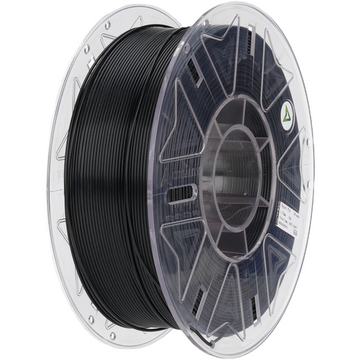
Practical tip: start with four contrasting colors. Black, white, and two striking accent colors are useful for a surprising number of projects. Check out our range of 3D printer filament for this.
2. It’s no longer just about print speed
Manufacturers love to showcase impressive speeds. But the highest number on the packaging doesn't tell the whole story.
A printer shouldn't just move quickly. It must also extrude accurately, compensate for vibrations, and maintain sharp corners at high speeds. That is why the focus in 2026 is shifting toward the combination of speed, quality, and reliability.
Systems such as input shaping, automatic flow calibration, and vibration compensation help reduce ghosting and other visible defects. So the real question isn't: how fast can this printer move? But: how fast can this printer produce a beautiful and reliable final product?
3. Functional printing is growing faster than decorative printing
One of the most interesting developments is the shift from “fun to make” to “useful to use.” Makers are increasingly printing tool holders, cable guides, machine parts, mounting brackets, electronics housings, spare parts, and prototypes.

PLA remains excellent for simple projects and visual models. However, for functional parts, users are increasingly choosing PETG, ASA, TPU, or fiber-reinforced materials.
| Application | Suitable filament |
|---|---|
| Decoration and prototypes | PLA |
| Sturdy utility items | PETG |
| Flexible parts | TPU |
| Outdoor parts | ASA |
| Rigid technical parts | PA-CF or PET-CF |
Only use abrasive filament, such as carbon fiber-reinforced material, when the printer has a suitable hardened nozzle and drive system.
4. Keeping filament dry is becoming part of the print process
Moisture is a silent cause of failed prints. Many filament types absorb moisture from the air. During printing, this can lead to small bubbles, stringing, rough surfaces, and weaker layers. PETG, TPU, nylon, and support materials are particularly sensitive to this.
That is why we are seeing more systems that not only store filament but also actively dry it and feed it directly to the printer from the dry box. For example, the AMS 2 Pro from Bambu Lab combines storage, automatic transport, and drying up to 65 °C.
- Dry the filament if necessary.
- Store opened rolls in an airtight container.
- Use a desiccant in the storage box.
- Check the filament before you start adjusting printer settings.
Not every bad print is caused by the printer. Sometimes, a damp roll of filament is simply the problem.
5. One machine is gaining more functions
The line between a 3D printer and a compact workshop is blurring. New machines combine 3D printing with techniques such as laser cutting, engraving, drawing, or digital cutting.
This does not mean that every user immediately needs an all-in-one machine. It primarily shows which direction the market is moving: the 3D printer is becoming the central component of a digital workshop where you can design, test, adjust, and produce an idea.
For small businesses, this offers interesting possibilities:
- creating a product prototype quickly;
- producing personalized items;
- printing tools for the workshop;
- making parts that are no longer available;
- producing small batches without expensive molds.
6. Larger printing is becoming more accessible
Anyone who wanted to print a large model previously had to split the design into multiple parts. This was followed by gluing, sanding, and filling seams. Larger build volumes make it possible to produce helmets, housings, lamps, and large prototypes in one piece.
However, a large printer is not automatically the best printer. Before purchasing, pay attention to the available space, heat-up time, filament consumption, frame rigidity, and the cost of a failed large print. For small parts, a compact, reliable printer is often still the wisest choice. View and compare our 3D printers.
7. Upgrades remain important but are becoming more targeted
The era in which every printer had to be completely rebuilt first is slowly coming to an end. Nevertheless, good upgrades remain valuable. The difference is that users are now more likely to solve one specific problem instead of replacing parts at random.
- a hardened extruder gear for abrasive filament;
- a wear-resistant nozzle;
- a better build plate for specific materials;
- a filament dryer;
- spare hotends for different nozzle sizes;
- better parts for the filament feed.
Do you print a lot with a Bambu Lab A1 or A1 mini? Then a wear-resistant drive, such as the BIQU Panda Claw Hardened Gear Set, can be interesting for intensive use or when you are experimenting with demanding materials.
What do these 3D printing trends mean for you?
You don't automatically need to buy the newest or most expensive machine in 2026. The best investment depends on what you want to make.
- Choose multicolor when aesthetics and personalization are important.
- Choose an enclosed printer for technical materials and temperature stability.
- Choose a larger build volume for helmets, housings, and large prototypes.
- Choose a filament dryer when you use PETG, TPU, or nylon.
- Choose wear-resistant parts when you print frequently or with abrasive filaments.
- Above all, choose reliability when the printer needs to produce daily.
Conclusion: 2026 is the year of smarter 3D printing
The biggest progress is not in one spectacular feature. It is the combination of automatic calibration, higher speed, multicolor, material management, and reliability that is changing 3D printing.
With this, the printer is becoming less of a device that you constantly have to tinker with and more of a tool with which you can actually produce.
Ready to print smarter? Discover 3D printers, filaments, and parts and upgrades for your next project at AC Products.
Frequently asked questions about 3D printing in 2026
What is the most important 3D printing trend of 2026?
Automatic multicolor and multimaterial printing is one of the most important trends. At the same time, material changes are becoming faster and more efficient.
Which filament is best for beginners?
PLA is generally the easiest choice. It prints easily, is available in many colors, and is suitable for decorations, prototypes, and general use.
Is PETG stronger than PLA?
PETG is usually more impact-resistant and more resistant to moisture and heat. PLA is stiffer and often easier to print. The best choice therefore depends on the application.
Do I need a filament dryer?
For PLA, a dryer is not always necessary. For PETG, TPU, nylon, and support materials, proper drying can make a big difference in print quality and reliability.
Is multicolor 3D printing more expensive?
Yes. Color changes can consume extra filament by purging the nozzle. Modern systems are trying to limit this material loss and the extra print time as much as possible.


Leave a comment