


You work daily with CAD models, iterative prototypes, and tight deadlines. Every hour that a physical model is late arriving on your desk hinders the design process and increases project risk. A Bambu Lab printer is developed to remove exactly that bottleneck. This blog discusses in detail why the latest generation of Bambu Lab systems is so attractive to professional designers and mechanical engineers: from their CoreXY architecture and multi-color capabilities to the user-friendly software stack and long-term cost savings. After reading this, you will know whether investing in a Bambu Lab printer is the logical next step for your R&D department or prototype studio.
Speed without compromising on quality
Traditional FDM printers often reach 80–120 mm/s at an acceleration of 1,000 mm/s². The Bambu Lab printer effortlessly doubles that thanks to a rigid carbon composite frame, CoreXY kinematics, and accelerations of up to 20,000 mm/s². You can therefore print real-size housings or functional clips in hours rather than days, without visible artifacts. For designers, this means a "hold-in-hand" model is available within the same working day, allowing decisions to be made faster and errors to be discovered sooner.
Multi-material and color as standard
While conventional systems require expensive add-ons, an automatic filament system (AMS) is optional but seamlessly integrated into the Bambu Lab printer. Four to sixteen spools switch automatically, allowing you to print drag indicators, support in soluble PVA, or contrasting letters in a single run. Engineers can thus visualize assembly instructions or stress zones without post-processing. You save time and see immediately how parts in different colors work together, which 2D drawings never show as clearly.
Material freedom for functional prototypes
Nylon Carbon, glass-filled PA, TPU, or simple PLA: the direct-drive extruder and fully enclosed build chamber ensure that the Bambu Lab printer combines high print temperatures with uniform cooling. Warping of technical plastics is drastically reduced, making it suitable for working hinges, gears, or drone frames. This is a major advantage if you need durable test parts before ordering injection molds.
Smart software and cloud workflow
Bambu Studio, the slicer, imports STEP, 3MF, and STL files without plugins, recognizes cavities for automatic support, and optimizes pathing for gyroid infill. Via the Bambu cloud, you and your team monitor progress remotely; sensors report filament breaks, nozzle clogs, and even if the door is left open. You therefore do not need to sit next to the Bambu Lab printer to ensure reliable results.
Summary of the most important benefits
The system delivers significantly shorter print times thanks to a rigid CoreXY construction and extremely high acceleration values, meaning prototypes are often in your hands the same day. The automatic material changer makes it possible to switch effortlessly between multiple colors or polymers during a single print job, offering both aesthetic and functional added value. Thanks to the enclosed build chamber and direct drive, the machine processes technical plastics like fiber-reinforced nylon or flexible TPU without issue. Smart sensors, cloud monitoring, and an intuitive slicer reduce misprints to virtually zero and keep maintenance to a minimum. Add to that the low failure rate and reduced post-processing time, and the total cost per prototype drops significantly compared to outsourcing or older in-house equipment.
Costs and ROI: the calculation
An average office spends €8,000 per year on external prototypes. Purchase and running costs of a Bambu Lab printer are around €1,600, excluding AMS. High-quality filament costs approximately €25 per kilogram, but in-house printing eliminates shipping delays and expensive express services. With usage of ten print hours per week, you will earn back the investment within nine to twelve months. Moreover, you keep knowledge in-house and maintain full design privacy.
Maintenance and reliability
The modular hot-end of the Bambu Lab printer clicks out in seconds for replacement or cleaning. Software-driven bed leveling and vibration compensation calibration reduce human intervention. AC PRODUCTS supplies spare parts within 24 hours and offers a maintenance contract, making downtime virtually nil. This keeps your iteration speed high, which is crucial in agile development processes.
Case studies: From start-up to automotive
Start-up Med Wearables shortened its design cycle by 65%: sensor holders were printed overnight, tested in the morning, and adjusted the same day. A large automotive tier supplier uses ten Bambu Lab printers in parallel; every design sprint produces hundreds of vehicle-fit clips that were previously ordered from a service bureau. The time savings translated into a faster market launch and lower tooling costs—convincing proof that the technology is scalable from single units to a mini-farm.
Sustainability and material savings
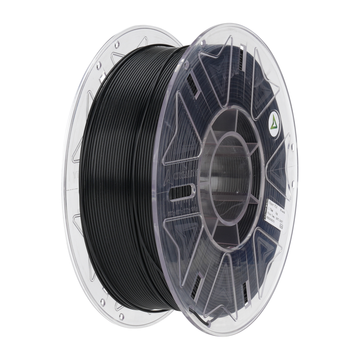
Thanks to precise flow calibration, the Bambu Lab printer uses exactly the necessary amount of filament; stringing and oozing are minimized. Smart tree support generates 40% less waste than block support. Remnant pieces are fully recyclable, and AC PRODUCTS offers a take-back service for used spools. This way, you contribute to circular product development without compromising on functionality.
From orientation to fully operational use
The implementation process starts with an analysis of the current prototyping flow to clarify how many models can be manufactured internally. Based on this, you choose the model that best aligns with your design goals in terms of build volume and material range. A live demo with your own CAD file immediately shows what print quality is achievable and how much time is saved. During a one-day training session, the team becomes familiar with slicer settings, material changes, and basic maintenance, so production can begin immediately. Integration with existing project software occurs via simple API connections, after which progress and costs can be tracked in real-time. After a three-month test period, you compare the new workflow with the old situation; once the benefit is proven, scaling up to multiple units or additional material modules is a logical next step.
Conclusion: a strategic investment in innovation
For designers and engineers who demand speed, precision, and versatility, the Bambu Lab printer forms a powerful answer to the growing demand for shorter time-to-market. It combines high print speed with multi-material functionality, reliable cloud software, and low operational costs. AC PRODUCTS guides you from the first introduction to a fully operational print workflow, including maintenance and material advice. Take the step today towards in-house rapid prototyping and experience how the Bambu Lab printer accelerates your design process, lowers your costs, and significantly expands your creative possibilities.



Leave a comment