


In many workshops, 3D printing started as an experiment. Today, teams prioritize predictability: parts that fit, a schedule that holds up, and less post-processing. Creality 3D printers align well with this shift. You get accessible machines with logically structured settings, allowing you to quickly move from your first test piece to repeatable output. You will notice the difference in small details that add up: a neat first layer, less stringing on open surfaces, and profiles you can use as a starting point without endless tweaking. This turns printing from an isolated hobby project into a reliable production step in your process.
Accessible starts, professional scaling
Those just starting out don't want a complex learning curve; those with experience want to expand efficiently. Creality offers that exact user-friendliness with a clear path forward. Basic profiles deliver usable results, after which you can refine by material. Controls are intuitive, parts and nozzles are easy to replace, and upgrades are modular. You start with PLA and a standard nozzle, and later add a hardened nozzle, an enclosure, or a filament dryer. This way, your setup grows with your applications without requiring you to reinvest in completely different hardware. This keeps the learning process short and the total cost of ownership manageable.
Balance between speed and quality
Speed is attractive, but only if the dimensional accuracy remains intact. In modern models, Creality combines a rigid structure with smart calibration routines and slicer profiles that offer a realistic bandwidth for each material. The result is fewer test prints, lower failure costs, and faster transitions from concept to functional part. In practice, this means saving minutes per print and avoiding hours of repair work every week. Especially for small series or urgent orders, this adds up to noticeable time-to-market gains, without sacrificing quality for speed.
Consistent first layer and predictable tolerances
A stable first layer determines if a print succeeds. With automatic or guided leveling, clear Z-offset steps, and straightforward first-layer checks, Creality makes this process concrete. You quickly establish a repeatable foundation: nozzle height, bed temperature, and adhesion method. As a result, corners stay down and perimeters seal tightly. For functional parts, this means better-fitting holes, less re-drilling, and tighter snap-fit joints. In serial production, this consistency provides peace of mind. You can trust that the tenth print will behave just like the first, ensuring that planning and quality control remain predictable.
Trouble-free material selection
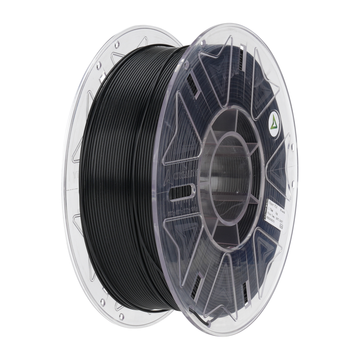
From PLA and PETG to technical blends: with the right profile and dry storage, you get more out of the same filament. Creality provides you with a solid foundation to quickly arrive at an accurate operating window for every material. In practice, it works simply: start with the recommended range, make small adjustments for cooling and speed, and check a test strip for hole fit and wall thickness. For hygroscopic materials, add a drying box, and you will see stringing decrease and surfaces become cleaner. This turns material selection into a manageable variable in your process rather than a source of inconsistent quality.
Modular thinking: Expand where it pays off
Not every application requires all the bells and whistles from the start. Begin compactly and expand in a targeted manner. Creality makes it easy to install valuable upgrades step-by-step: a hardened nozzle for glass-fiber-filled materials, an enclosure for more stable chamber temperatures, or silent drivers for office environments. By thinking modularly, you only invest where it delivers returns. Meanwhile, maintenance and spare parts supply remain straightforward, as many components are widely available and swapping them does not require intensive disassembly. The result is a setup that does exactly what you need, without unnecessary complexity.
Scalable management for labs and education
As soon as you deploy multiple machines, standardization becomes more important than absolute top speed. Creality lends itself well to a uniform base profile per material, shared checklists, and a simple first-article inspection for every new part. Team members work with the same principles, while variations per assignment are neatly documented. You link prints to project codes, save photos of the first layer, and record nozzle hours. This allows you to trace back later why a part was perfect and reproduce that result. In education, the low barrier to entry is especially appreciated: students quickly understand what to adjust, and instructors maintain an overview.
Community and documentation as an accelerator
A large ecosystem accelerates learning. Manuals, how-to guides, and user forums ensure you rarely start from scratch. Creality benefits from this broad community: frequently asked questions have already been answered, common problems have multiple proven solutions, and you can find example profiles that are close to real-world applications. This shortens the time between question and result. For teams, this means less dependence on a single expert and more support to deploy 3D printing more broadly in projects, prototyping, and small series.
TCO and reliability in practice
True costs lie not just in purchase price, but in failure rates, post-processing, and lost hours. Creality scores exactly on those hidden items: parts are affordable, the learning curve is short, and profiles provide a predictable start. Add simple maintenance routines, and you get a lower unit price per usable part. If you do need to repair an extruder or change a hotend, components are easily available and the machine is back in service quickly. This keeps your planning on track and reduces stress around deadlines, even when the print queue grows.
Quick checklist for reliable output
One list is enough to start every printing day right and keep failure costs low.
- Check nozzle height and bed cleanliness before the first job.
- Work with labeled spools and record drying times.
- Start every new part with a test strip: hole, slot, wall.
- Log nozzle hours and schedule replacements in time.
- Keep a base and a high-detail profile for each material and document any deviations.
Why choose AC PRODUCTS
You don’t want a search; you want results. At AC PRODUCTS, we translate your goal and application into a concrete setup, including profiles, nozzle advice, and a simple first-article procedure. We advise you on material strategy, drying, and maintenance so that you get more usable parts per week out of the same floor space. You won't get endless theory, but rather a workable approach that fits your team and your planning. Starting today, consistent prints by tomorrow: that is the promise we strive for.
Discover the full range and possibilities directly at AC PRODUCTS.


Leave a comment