


You are looking for a 3D printer that doesn't carry the "hobbyist" label, but also doesn't come with the price tag of an industrial machine. You want to print voluminous models in one go, without days of waiting. And you want the freedom to manufacture both an artistic lampshade concept and a functional housing in fiber-reinforced material, preferably in the same weekend. It is precisely in this sweet spot that the Creality K1 Max positions itself. The flagship of Creality’s Core-XY family combines a generous build volume of 300 × 300 × 300 mm with speeds of up to 600 mm/s, an AI camera for real-time quality monitoring, and a streamlined workflow that makes even novice users productive quickly.
Positioning: Desktop convenience, near-industrial output
Creality’s K-series aims to bridge the gap between open-frame entry-level models and enclosed, sensor-rich workhorses. The Creality K1 Max stands at the top of that scale: where the standard K1 offers a build volume of 220 × 220 × 250 mm, the Max variant nearly doubles that without a significantly larger footprint. Due to the Core-XY kinematics principle, only the lightweight print head moves in the X and Y directions; the bed only moves vertically along precisely guided linear rails. The result is low moving mass, meaning less chance of ghosting or ringing at high speeds. You get the ease of use of a desktop printer, but with powerful dynamics and a chamber temperature that can handle even engineering-grade materials.
Speed without loss of quality
Creality claims 600 mm/s as top performance, but practical tests show that the Creality K1 Max exhibits virtually no visible artifacts at 350 mm/s thanks to input shaping and a built-in accelerometer. This sensor feeds vibration data to the firmware, which then compensates the motor profiles. You therefore do not experience banding echoes in rounded corners and do not need to perform real-time fine-tuning in G-code. At a 0.2 mm layer height, you produce a 150 mm prototype in four hours instead of eight. That is not only time saved, but also a significant energy saving.
Build volume: Room for big ideas
The 300 mm cube format of the Creality K1 Max opens doors to applications that simply do not fit on conventional desktop printers. Think of a modular helmet design, an architectural mass study model, or a housing for a battery pack in one piece; no adhesive joints, no structural weaknesses. Yet the printer remains compact enough for a desktop or workbench in a makerspace. At 435 × 462 mm, AC PRODUCTS measures the footprint as only fifteen centimeters wider than many smaller competitors.
Materials compatibility: From PLA to fiber-reinforced nylon
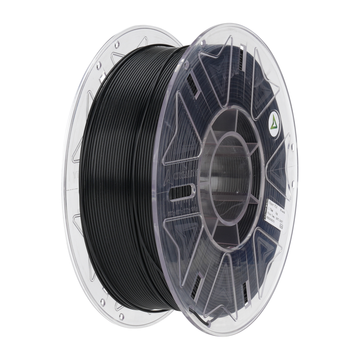
As standard, Creality supplies an all-metal hotend with a maximum temperature of 300 °C and a bed that reaches 120 °C. This means the Creality K1 Max prints PLA, PETG, ABS, ASA, and flexible TPU without modification. With the optional high-temp nozzle and a PEI-coated flex-plate, glass- and carbon-fiber-filled filaments up to 30% are also easy to handle. For projects that require structural strength—think drone arms or functional robot covers—this is a big plus; you simply swap the spool and print profile without new mechanical additions.
AI camera and cloud connectivity
One of the showpieces of the Creality K1 Max is the integrated AI camera. Unlike standard webcams, this module detects first-layer errors, spaghetti formation, and potentially jammed extruders. If the algorithm detects an abnormal pattern, the printer automatically pauses and sends a push notification to your smartphone. This prevents material waste and avoids discovering a failed print only in the morning. Via Creality Cloud, you can also start, pause, or restart jobs remotely; ideal for development teams who want to monitor prototypes from home.
Maintenance and total cost of ownership
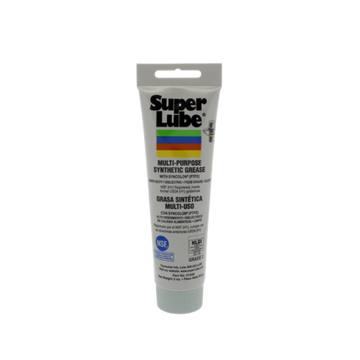
An enclosed, high-speed printer requires regular maintenance. With the Creality K1 Max, however, this is limited to three main tasks: lubricating the rails with PTFE grease once every 150 print hours, replacing the HEPA filter every month, and checking the silicone sock around the nozzle after 500 hours. Thanks to modular components (only two screws to change the hotend), routine care takes less than ten minutes. AC PRODUCTS calculated the total cost of ownership over three years and arrived at an amount 25-40% lower than for comparable Core-XY printers with manual bed leveling.
Comparison with previous generations and competitors
Creality’s own Ender and CR series are known for reliable prints at a low price, but they lack fast accelerations and a large build cube. Competitors like Bambu Lab X1 Carbon do offer AI cameras and similar speeds, but deliver a smaller volume or a higher price tag. The Creality K1 Max positions itself exactly in between: high-speed sensor technology and large build volume at a rate that remains manageable for SMEs and educational institutions.
Practical case: Creative design agency versus technical R&D team
Creative studio: A design agency in Rotterdam uses the Creality K1 Max for lampshades with intricate lattice structures. Previously, they split a 28 cm model into four segments and glued them together; now they print it in one piece, save two hours of post-processing, and present to clients faster. Technical R&D: A start-up in the automotive sector prints ABS-CF sensor housings. Thanks to the enclosed chamber and high-temp extruder, they achieve tolerances within ±0.05 mm. The AI camera reduces scrap ratio to 2%. Without hardware upgrades, they switch between conceptual PLA mock-ups and functional carbon composites.
Getting started: Settings and workflow
- Firmware update: check the Creality site during initial startup; input shaping tables are updated frequently.
- Bed leveling: the active “strain gauge” sensor scans sixteen points; repeat after transport or nozzle change.
- Slicer profile: use Creality Print or import the K1 Max config into Cura/PrusaSlicer; set 0.2 mm layer height and 0.4 mm nozzle for baseline.
- Cooling: PLA: fan 100%; PETG: 60%; ABS/ASA: 0-20% to minimize warping.
- Re-spool management: label spools with drying data; nylon and CF mixes should preferably be printed after 4 hours in a drying oven at 60 °C.
With this starter recipe, you will achieve reproducible results within the first day. AC PRODUCTS also provides a set of optimized presets that can be imported directly into the slicer so you don't have to start with temperature towers yourself.
Sustainability and recycling
The enclosed chamber retains heat, which reduces energy consumption per printed gram. You can recycle PLA residual elements via AC PRODUCTS’ return program; we grind scraps into test granulate or second-line production runs. For fiber-reinforced materials, we offer a collection service where carbon and glass fiber fractions are separated for composite plates in the furniture industry. This way, the Creality K1 Max not only remains functional, but is also part of a circular workflow.
Conclusion: One machine, endless possibilities
Whether you are a creative designer who wants to showcase complex geometries or a technical engineer who demands functional parts with tight tolerances, the Creality K1 Max offers the speed, volume, and material reliability to serve both worlds. The AI camera, Core-XY kinematics, and all-metal hotend together form a tool that is ready for future demands without you having to renovate half a workshop or take out an industrial loan. AC PRODUCTS supports you from the first unboxing deep into the production phase with slicer profiles, maintenance kits, and recycling solutions. Invest in the Creality K1 Max and experience how creativity and technical precision come together in one powerful print solution.


Leave a comment