


You want to get started without the hassle, with a machine that delivers reliable results quickly and doesn't force you to spend your evenings tinkering. A 3D printer for beginners should guide you rather than get in your way. In this guide, AC PRODUCTS lists the most important choices and recommends concrete models, so you can decide with confidence and your first prints are immediately usable.
What makes an entry-level machine truly friendly
Not every 3D printer is equally forgiving. For a 3D printer for beginners, three points matter most. One: automatic or guided calibration, especially for the first layer and bed leveling. Two: predictable material flow, meaning a good extruder and neat profiles for PLA and PETG. Three: a solid chassis or at least a stable frame, so that speed doesn't immediately cause visible ripples or dimensional errors. Everything that goes smoothly in the first week increases the chance that you will keep printing and thus see real value.
FDM or resin, and what you notice in reality
Most starters choose FDM because you can quickly make sturdy prototypes and visual parts with it, using inexpensive materials and little post-processing. Those who want very fine miniatures look at resin, but that comes with more cleaning and safety requirements. For a 3D printer for beginners, FDM is in practice the shortest route to self-confidence: PLA prints cool, adheres easily, and produces surprisingly neat surfaces. PETG is your second step if you need more toughness and heat resistance.
Top choices that perform strongly today
The shortlist below contains machines with which we have good experience in the start-up phase. Each option is a 3D printer for beginners that doesn't force you to tune endlessly before the first layer sticks.
- Bambu Lab A1 mini or P1S: lightning-fast start-up, smart input shaping, neat profiles, and an ecosystem that streamlines beginner work. Ideal if you want tempo and stability in a compact footprint.
- Prusa MINI+: proven reliability, excellent documentation and community, significant accuracy in a small format. Very suitable for education and small functional parts.
- Creality Ender-3 V3 SE/V3 KE: affordable, with automatic bed-leveling and sufficient rigidity. Perfect if you want to take a first step with room to upgrade later.
- Anycubic Kobra 2 (or Go): fast assisted leveling and smooth assembly. Great when you mainly want to run PLA and PETG with minimal setup time.
- Flashforge Adventurer 4 or Qidi X-Smart 3: more enclosed chassis, quieter, with neat out-of-the-box profiles. Recommended for office environments or home workstations.
- AnkerMake M5C: high practical speed with solid print quality, simple operation via app. Interesting if you want few buttons and are mainly looking for consistency.
Which one suits your use case
If you are choosing a 3D printer for beginners for education, pay attention to the chassis, noise level, and repeatability. A closed or semi-closed machine is quieter in the classroom and keeps fingers away from moving parts. For product development in a small team, speed weighs heavier: a rigid CoreXY frame with good vibration compensation lets you iterate more per day. For hobbyists who mainly print visual parts, the finish of PLA parts counts most. In that case, a machine with a very neat first layer, good cooling, and tight corners wins, even if it doesn't reach the absolute highest speed.
What you notice in the first 30 days
The first month is about rhythm. A 3D printer for beginners that helps you with assisted bed-leveling and a clear first-layer test takes away a lot of stress. You immediately learn three basic tasks: keeping the nozzle and bed clean, keeping filament dry, and choosing profiles that match the part. During the first week, print small test blocks for dimensional accuracy, tolerance, and bridging. For each print, only note three parameters: layer height, nozzle speed, and temperature. Those who track this will have their own “recipe book” after a few days and no longer have to guess.
Material choice without the fuss
PLA is your starting material: rigid, easy, low odor. PETG follows for functional parts that need to withstand some impact. ABS and ASA are possible later, but require more environmental control. A 3D printer for beginners that provides neat profiles for PLA and PETG as standard saves you a lot of trial and error. Store rolls in a box with desiccant or a simple dry box. Many print problems that look like software issues are, in reality, moisture in the filament.
Costs and total cost of ownership
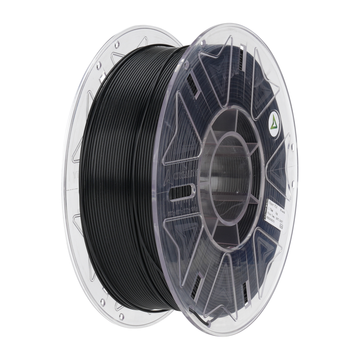
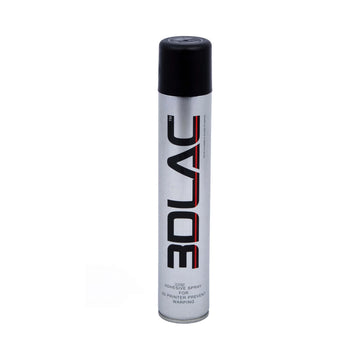
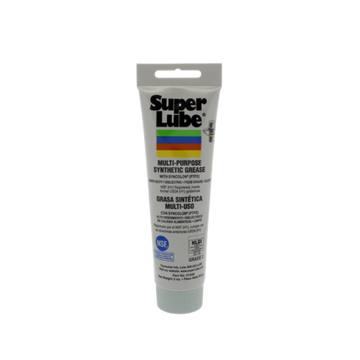
When buying a machine, think beyond the box. Items you will actually use include: 3 to 5 rolls of PLA in your basic colors, a few spare nozzles, a lubricant for guides if prescribed by the manufacturer, and perhaps a spatula and side cutters of decent quality. For a 3D printer for beginners, these are small amounts, but they make your workday flow. The big profit is in less rejection. A predictable first layer and good profiles lower your scrap percentage, and that is where the euros are either lost or saved.
Common mistakes and how to prevent them
A first pitfall is wanting to print too fast. Higher speeds seem attractive, but if you don't have a reference yet, you create unnecessary variation in size and surface finish. Start slowly, then scale up. A second is changing too many things at once. Change one setting per iteration and note the result. The third is worrying about slicers. Choose one slicer recommended by the manufacturer and master the basic profiles first. This way, your 3D printer for beginners remains a production tool instead of a constant experiment.
Growth path without regrets
You start small, but you want to be able to move forward. That is why it is useful if your 3D printer for beginners allows parts to be changed easily. A nozzle unit that you can replace in minutes, a build plate with solid adhesion and simple maintenance, and possibly access to multi-material or an enclosure when your work demands it later. This way, the machine grows with you and you only need to replace it when your volumes require it, not because you get stuck on the basics.
Why guidance pays off
A good start saves weeks of experimenting. At AC PRODUCTS, we help you set up the 3D printer for beginners you choose: we go through the first-layer check with you, prepare proven profiles for PLA and PETG, and advise on dry storage and maintenance routines. You also receive concrete test models with which you can validate fit and tolerance on your own parts. The result is that after day one, you already have prints that can be used for something.
Frequently asked questions, answered briefly
Do you need an enclosure to start? Not necessarily. For PLA and PETG, an open frame is fine, although a semi- or full-enclosure is quieter and more consistent. Is auto-leveling mandatory? For convenience and repeatability, it is quite pleasant, especially if multiple people operate the machine. Which build plate is best? PEI-coated steel is versatile and user-friendly; glass is possible, but requires a bit more attention to adhesion. Does every slicer fit? In the beginning phase, preferably use the slicer supported by the manufacturer, so that profiles and firmware work well together with your 3D printer for beginners.
Making a realistic choice
If you mainly want to learn and deliver neat PLA parts, choose a compact machine with strong first-layer assistance and ready-made profiles. If you want to run small functional series, choose a model that combines high practical speed with a stable frame and good cooling. And if you work in an office or classroom, a closed or quieter version is the more peaceful option. Whatever direction you choose, the goal is the same: a 3D printer for beginners that takes work off your hands and shortens your learning curve.
Conclusion: Choose predictability, then speed will follow naturally
The best 3D printer for beginners is the machine that makes the first layer predictable, includes reliable profiles, and doesn't force you to figure out every detail yourself. With the shortlist above, a clear idea of your use case, and a simple starting rhythm, you will have prints you are proud of within a few days. AC PRODUCTS is happy to help you with selection, set-up, and material choice, so that you not only start today, but are still producing with pleasure a month from now. This way, your first step becomes a firm one immediately, and you continue to grow on a foundation that works.


Leave a comment