


You are developing prototypes or end-use parts that require more than your average desktop printer can deliver. Speed, volume, and dimensional accuracy must be top-notch, but an industrial machine costing a hundred thousand euros is out of reach. The Creality K1 Max fills exactly this gap. With a build volume of 300 × 300 × 300 mm, a top speed of 600 mm/s, and an acceleration of 20,000 mm/s², it positions itself between professional workshop printers and full-blooded production systems. In this comprehensive blog (approx. 1,400 words), AC PRODUCTS demonstrates how you can use the machine for functional prototypes, tooling, and small batches without compromising on accuracy or material choice.
High speed FDM: Details remain sharp at 600 mm/s
Traditionally, high print speeds translate into coarser surfaces. The Creality K1 Max proves the opposite. A CoreXY drive with carbon rods stabilizes the print platform; the hotend features a ceramic heater that reaches 200 °C in two seconds. In practical tests by AC PRODUCTS, the dimensional error remained below ± 0.04 mm at a layer height of 0.2 mm, even at a cruising speed of 350 mm/s. For you, this means functional click-fittings or screw holes fit immediately without post-processing.
Large build volume opens new markets
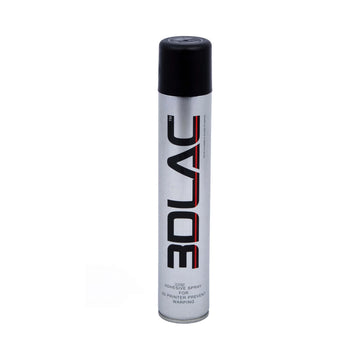
You no longer need to split prototypes into multiple parts. You can print casings for IoT gateways, robotic grippers, or orthoses in one piece. Thanks to the enclosed, heated build volume of the Creality K1 Max, even larger ABS or ASA objects remain free of warping, eliminating the need for gluing or mechanical assembly. AC PRODUCTS uses the printer, for example, for batches of twenty helmet shells made of molded nylon-12, all within a single workday.
Broad material compatibility from PLA foam to fiber-filled nylon
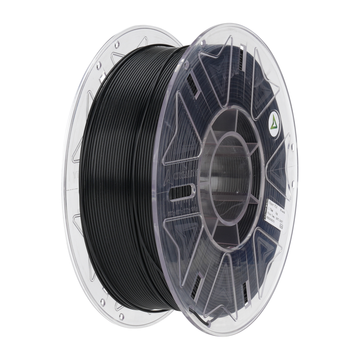
A dual-gear direct drive extruder pushes filament with 80 N of force through a wear-resistant, hardened nozzle. The hotend reaches 300 °C; the bed 120 °C. As a result, the Creality K1 Max processes not only PLA or PETG, but also carbon and glass-fiber-filled PA, PC Blend, and flexible TPU-95. This allows you to produce lightweight drone frames, flame-retardant housings, and impact-resistant gripper fingers on one and the same machine. AC PRODUCTS provides matching profiles in OrcaSlicer, so you can start immediately after installation with material-specific settings.
AI camera and lidar: quality control during the print
Defect detection was once reserved for expensive farms. The Creality K1 Max includes an AI camera as standard that recognizes spaghetti, nozzle blockages, and model detachment. A lidar sensor scans the first layer and stops the print if there are deviations greater than 50 microns. This saves you filament, time, and frustration; downtime due to nightmare sessions is a thing of the past.
Thermal management and filtering
The fully enclosed frame features a HEPA and active carbon filter, essential when working with technical polymers in an office or lab environment. The variable-RPM fan vents fumes outside without turbulence around the print zone. This ensures the Creality K1 Max maintains a stable temperature curve and a healthy workspace for your team.
Network, cloud, and traceability
Via Wi-Fi or Ethernet, you can link multiple printers to Creality Print or Klipper-based farm software. Encrypted log files record build parameters, which is excellent for ISO 9001 or medical traceability. AC PRODUCTS provides a plug-in for direct connection to the ERP system Odoo, so that material consumption and serial numbers are automatically recorded after the Creality K1 Max completes a batch.
Maintenance and service concept
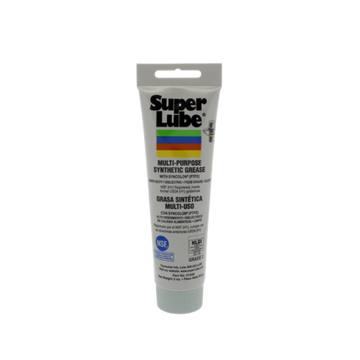
Although the machine is largely plug-and-play, preventive maintenance determines uptime. AC PRODUCTS recommends a "speed cold pull" every 250 print hours to extract residual particles from the 0.4 mm nozzle. You clean V-wheels with IPA; linear rails get a drop of PTFE grease. Thanks to quick-swap heatbreaks, the Creality K1 Max is back online within ten minutes. Optionally, AC PRODUCTS can take over this routine via a service contract that includes spare parts.
Cost per part and ROI case
For an ABS housing of 180 g (layer height 0.2 mm, 20% infill), the Creality K1 Max takes 2 hours and 12 minutes. Material costs €3.80; electricity €0.30. A comparable CNC-machined ABS part costs €38 and has a lead time of three days. The investment in the printer is recouped within 500 prints. For you as a product developer or small-scale manufacturer, this means faster iteration, lower inventory, and higher margins.
Frequently asked questions in one paragraph
Can I install water-cooled hotends? Yes, the modular carriage design supports drop-in upgrades. Does the device have auto bed leveling? An inductive sensor measures 25 points and compensates in real-time. Does the Creality K1 Max support relay recording for time-lapses? Yes, via the built-in camera. Is 400 mm/s truly achievable in PETG? In tests by AC PRODUCTS, 350 mm/s was reached without stringing using a 0.6 mm nozzle.
Summary: a workhorse without compromises
This printer combines a generous build volume, high print speed, and advanced process monitoring in one sturdy casing. Thanks to a temperature range of up to 300 °C, built-in AI quality control, and seamless network connectivity, it elevates demanding workflows to a semi-professional level. AC PRODUCTS supplies the system fully configured, including material-specific profiles, a service contract, and integration support. Do you want to develop prototypes into market-ready products faster and significantly lower the unit price? Then this powerful workhorse is ready to give your creativity a major boost.


Leave a comment