


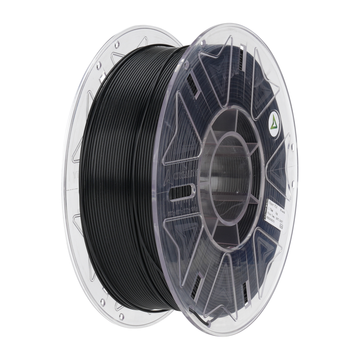
You can invest in the best Core-XY printer, the tightest linear rails, and the quietest stepper drivers, but without the right filament, a print will never be anything more than a well-intentioned test piece. After all, the material forms the link between a design and a tangible object. At AC PRODUCTS, we see daily how a conscious choice regarding composition, diameter, and conditioning makes the difference between warping and perfectly flat layers. In this comprehensive blog (approx. 1,540 words), we guide you through the criteria that truly matter, from mechanical requirements and aesthetic finish to moisture management and durability.
From idea to material: The first filter
Everything starts with the question of what the end product needs to be capable of. A decorative figurine has different requirements than a functional gear. PLA excels in detail rendering and shrinks minimally, while a glass-filled polyamide is resistant to a continuous 120 °C. If you have a printer room without an active filter or ventilation, it is better not to choose ABS, as styrene vapors are released. Thus, the planned use determines the type of filament and the boundary conditions of your workspace early on.
Mechanical properties under the microscope
Tensile strength, impact resistance, and modulus of elasticity provide direction for your choice. PETG combines reasonable temperature resistance with flexibility; it is perfect for housings that need to withstand an impact. If you need bearings or sliding blocks, look into self-lubricating POM blends. AC PRODUCTS tests every batch of filament on tensile benches and with DSC (Differential Scanning Calorimetry) equipment to ensure that the nominal values are accurate, as data sheets from some manufacturers are unfortunately more optimistic than reality.
Dimension and tolerance: More than ± 0.05 mm
A consistent extrusion flow requires not only a flawless nozzle but also a diameter that barely fluctuates. The quality standard is ± 0.02 mm, although budget spools often claim ± 0.05 mm or even ± 0.1 mm. In practice, such a deviation translates into visible lines, an uneven top layer, or open seams. AC PRODUCTS measures its own filament with laser micrometers at 100 points per second; spools that fall outside of the tolerance are simply not shipped.
Moisture management: The silent print killer
Polymers such as nylon, TPU, and even PETG absorb moisture from the air. That water evaporates in the hotend, causing steam bubbles and resulting in a rough surface or porous infill. Therefore, store hygroscopic filament types in a sealed dry box with silica. For intensive use, we recommend passive dry cabinets with a card indicator; if you print occasionally, a resealable bag with drying beads and re-drying in an oven at 70 °C for four hours before printing will suffice.
Match material and machine for the best result
Before starting the print, it is essential to check whether the printer hardware is suitable for the chosen material. A Bowden setup works fine for rigid plastics, but with flexible types, the long PTFE tube slows down the retraction of the filament, which can lead to over-extrusion and ugly stringing. A direct-drive extruder offers more control and consistency in that case. Additionally, check whether the heated bed reaches a sufficient temperature to prevent warping and whether the nozzle is made of an alloy that is wear-resistant to abrasive additives. By aligning these factors, you prevent failures and get the most out of every print job.
Aesthetics versus functionality
Some makers print prototypes in neutral gray PLA and only switch to a premium color once the design is finalized. Others specifically look for satin-gloss PLA or metal-effect PET blends for end products. Keep in mind that pigment-rich spools sometimes contain more dye than binder; the mechanical strength may then be 10% lower. AC PRODUCTS therefore performs tensile tests on all aesthetic variants to ensure that a sexy "silk" filament doesn't break at the first drop.
One compact summary: Five questions to ask yourself before purchasing
- What is the operating temperature of the part? → Determines whether PLA, PETG, or nylon is suitable.
- Does the part need to be impact- or bend-resistant? → Choose PETG, ABS-CF, or TPU.
- Do you have ventilation or an enclosed printer? → Required for ABS or PC due to vapors and warping.
- How critical is surface quality? → Satin-PLA or matte ASA provides a different finish than standard PLA.
- Do you have hardened nozzles? → Indispensable for fiber-reinforced or metallic filament types.
Case study: Prototype to micro-series
A start-up in Eindhoven developed a robot gripper and started with standard PLA. After functional testing, the part broke under a 12 kg load. Switching to carbon-filled nylon provided the necessary strength, but their Bowden printer resulted in inconsistent extrusion. After advice from AC PRODUCTS, they replaced the hotend with a direct-drive system with a hardened nozzle and a dry box. The result? A print that can handle 28 kg, without warping or layer separation. Five spools of filament for validation immediately yielded 200 functional end parts.
Storage and handling: The final mile
Even the best material fails with poor storage. Hang spools in a dust-free cabinet, store them in vacuum bags, or in a dry cabinet. Label the spool with print temperature, nozzle status (brass or hardened), and remaining length; this way, you are never caught off guard during a long print. Wrap the end in the holes on the rim; loose ends cause tangles and print stops. Ensure a clear "FIFO" (first-in, first-out) order so that old filament does not become moist unnoticed.
Frequently asked questions
Can I use PLA and PETG on the same print sheet? Yes, provided you clean the plate; PETG adheres more strongly, preferably use a PEI sheet or a separation layer of PVA glue stick. How do I recondition moist spools? Place them in a food dehydrator at 50 °C for 6 hours or in a convection oven at 70 °C; keeping it below the glass transition temperature keeps the crystal structure intact. Is metallic-colored PLA wear-resistant? It contains mica particles; the appearance is premium, but wear resistance is slightly lower than regular PLA. When do I choose flex filament? For parts that absorb shocks or need to be watertight, such as drone feet or gaskets.
Conclusion: A holistic view pays off
A perfect print result requires a well-considered filament choice in which mechanics, aesthetics, printer capacity, and storage conditions come together. By asking the right questions beforehand, you not only save money and time, but you also increase the reliability of your production, whether it involves a single decorative object or a micro-series of functional parts. AC PRODUCTS supports you from material analysis to drying solutions and hardened nozzles: that is how every layer becomes a solid building block toward a professional end result.


Leave a comment