


You are about to bring a design to life. Whether it’s a prototype, a functional part, or an educational model, the 3D printer is warming up. But perhaps you are also asking yourself another question: how sustainable is my way of working, really? More and more companies, schools, and designers want to produce more consciously without sacrificing quality. And that is exactly where PLA filament in a 3D printer makes the difference. At AC PRODUCTS, we help you at every step of that journey: from material selection to print result.
What is PLA exactly?
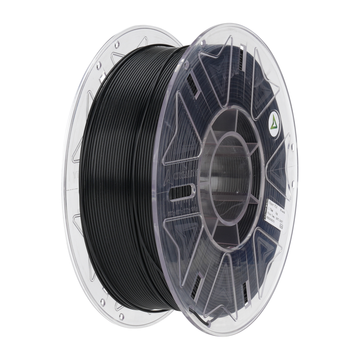
PLA stands for polylactic acid, a bioplastic made from renewable raw materials such as corn starch or sugarcane. Unlike petroleum-based filaments such as ABS, PLA is compostable under industrial conditions. But what truly makes PLA attractive is the combination of sustainability and excellent printability. With the right settings, you get smooth surfaces, sharp details, and minimal risk of warping—ideal for those who consciously choose a PLA filament 3D printer.
Sustainable and professional printing
Let’s be honest: sustainability should never come at the expense of results. And that is exactly where PLA excels. Modern PLA variants, especially from premium manufacturers, are much stronger and more stable than the PLA spools of a few years ago. Some types are even reinforced with minerals or biodegradable fibers, making them perform excellently in technical applications as well. So, your PLA filament 3D printer doesn’t have to compromise on finish or reliability.
Why choose PLA filament for your 3D printer?
You might wonder what the difference is compared to other filaments. We have briefly summarized it for you:
- Low print temperature (180-220 °C): meaning less energy consumption
- Little odor and emissions during printing: pleasant for work environments and classrooms
- Very low risk of warping: resulting in better adhesion to the print bed
- Biodegradable under industrial composting: more environmentally friendly than alternatives
- Versatile: from prototyping to finished visual products
Practical example: Product development with PLA
At a design department in Utrecht, they consciously chose a series of prototypes using PLA filament. The team was working on a modular storage system for medical equipment. Instead of PETG or ABS, they opted for a high-quality PLA type with a matte finish. The results were surprising: within 48 hours, a series of perfectly fitting parts were on the table, ready for test assembly. No odor, hardly any residual waste, and the waste that was produced was collected for industrial recycling. A PLA filament 3D printer made the entire workflow more efficient and greener.
Materials with a story
PLA is available in countless versions: standard, matte, glossy, wood-filled, recycled, transparent, and even filament based on recycled PET bottles. At AC PRODUCTS, we consciously choose suppliers who keep their production process transparent, strive for CO₂ neutrality, and limit packaging. This way, you not only know what you are printing, but also where it comes from and what the impact is. After all, a sustainable chain starts with conscious choices, and that begins with your PLA filament 3D printer.
Maintenance and lifespan of PLA prints
Although PLA is not as heat-resistant as some technical filaments, it offers a long lifespan when used correctly. For prints that are outdoors or in the sun, we do recommend choosing UV-resistant PLA versions or a protective coating. Inside factories, offices, schools, and homes, PLA objects perform for years without deformation. Your PLA filament 3D printer therefore produces not only neatly but also long-lasting usable items.
Frequently asked questions about PLA filament
Can I use PLA in any 3D printer? Almost every FDM printer supports PLA. Even entry-level models can process PLA without problems, as long as the hotend can be heated to at least 200 °C and the print bed is properly adjusted. How do I optimally store PLA? PLA does not like moisture. Therefore, store the spools in a sealed box with silica gel or in a dry box. This prevents the material from becoming brittle or "snapping" during printing. Is PLA really environmentally friendly? Yes, provided it is collected correctly. PLA is biodegradable in industrial composting facilities. It is therefore important that waste does not end up in the residual waste but is separated. Is recycled PLA less strong? Not necessarily. Some brands mix recycled material with virgin PLA to maintain a stable profile. Feel free to ask us for advice on specific applications.
AC PRODUCTS as a sustainable partner
At AC PRODUCTS, we go beyond just supplying. We guide schools, design studios, and manufacturing companies in the sustainable use of 3D printing technology. From choosing the right type of PLA to setting up profiles in Cura or PrusaSlicer, we think along with you. We also offer starter kits, printing training, and customized lesson plans for education. This way, you not only get more out of your PLA filament 3D printer, but you also ensure knowledge sharing within your organization.
What does PLA really gain you?
The costs of PLA are on average lower than those of PETG, ABS, or exotic filaments. Add to that the lower power consumption and shorter print times, and you will notice that your cost per part drops significantly. In addition, customers and partners increasingly value sustainability as a quality in itself. Those who choose a PLA filament 3D printer are therefore not only choosing functional prints but also socially responsible business.
Case study: Circular production at an ROC
An ROC (regional training center) in South Holland recently switched to PLA-based production within their technical training program. The students design parts for robot arms, armatures, and logistical test models. Thanks to PLA, they were able to produce in an environmentally conscious way without compromising on accuracy or stability. After three months, waste streams had dropped by 40% and satisfaction with print results had increased. A PLA filament 3D printer thus became the heart of a circular learning environment.
In conclusion: PLA has come of age
For a long time, PLA had the reputation of being an "entry-level material." But that image is outdated. The current generation of PLA filaments offers excellent mechanical properties, visual finish, and versatility. Combine that with a wide range of colors and compositions, and you have a material in your hands that is just as suitable for creative projects as it is for professional applications. Sustainable printing does not have to be a compromise. With a PLA filament 3D printer, you choose impact, without loss of performance.


Leave a comment