


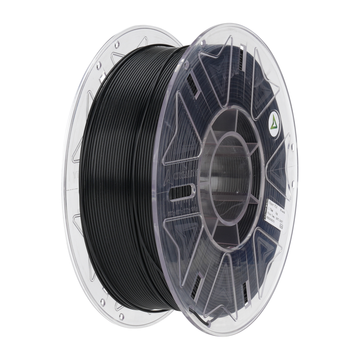
You want to produce high-quality prints without unnecessarily burdening the environment; at the same time, you expect the material to be easy to process, produce little warping, and remain compatible with virtually any desktop machine. In this area of tension, one combination consistently stands out: the PLA filament 3D printer. PLA, short for polylactic acid, is fundamentally a biopolymer derived from renewable sources, but its popularity is also due to its mechanical reliability and low threshold for entry. AC PRODUCTS has been supplying spools to designers, schools, and prototyping labs for years and sees how customers achieve consistent results faster with PLA, with fewer wasted print hours and lower energy consumption. In this comprehensive guide of approximately fifteen hundred words, you will discover how the PLA filament 3D printer delivers sustainability benefits, which settings are optimal, and how you can extend the lifespan of your printer and filament with small routine actions.
Sustainability value starts with the raw material
Where traditional plastics such as ABS or PETG are derived from fossil oil, PLA is extracted from corn starch, sugarcane, or tapioca. This means that the carbon chains you process in the PLA filament 3D printer were captured from the atmosphere by crops rather than drilled from geological layers. Under industrial composting conditions, pure PLA also breaks down into water and CO₂ within a few months. Even when you do not have an industrial composter at your disposal, its renewable origin already provides significant savings in life cycle analysis: according to a study by Nature Works, a kilogram of PLA emits over 60% less greenhouse gas than the same amount of ABS.
Energy consumption: Lower print temperature, fewer kWh
Another sustainability argument for the PLA filament 3D printer is its modest energy profile. PLA melts at just 180-200 °C, while ABS and polycarbonate require 240 °C or higher. That difference of 40-60 °C translates directly into lower electricity costs per print hour and less thermal load on hotend components. Moreover, a bed temperature of 50-60 °C is usually sufficient; some users even successfully print PLA on a non-heated glass or PEI bed. Less energy means, in addition to a lower bill, a smaller ecological footprint per printed object.
Ease of processing and waste reduction
Warping, delamination, and unpleasant fumes are high on the list of frustrations for makers. The PLA filament 3D printer eliminates many of those problems because PLA shrinks very little upon cooling and emits virtually no volatile organic compounds. The result is a significantly higher "first-time-right" percentage: less discarding of failed prints, less reprinting, and less wasted material. The numbers do not lie: in our service database, prints with ABS fail nearly twice as often as PLA prints of similar size.
A summary of five practical tips for maximum sustainability with PLA
• Store the filament in a dry box: PLA is slightly hygroscopic; dry storage prevents bubbles and rough surfaces.
• Print at 0.15-0.20 mm layer height for an optimal balance between detail and material efficiency.
• Use a 'draft shield' in the slicer to limit drafts around the print surface; this prevents unnecessary support structures.
• Recycle remnants: cut off frayed edges and supports into small pieces and hand them in at PLA return points; AC PRODUCTS turns them into test spools.
• Choose a 0.4 mm stainless steel or hardened steel nozzle when working with metal- or wood-filled PLA; this extends the life of both the nozzle and the spool.
Mechanical performance: More than just prototyping
A critical note that PLA sometimes receives is that it would be "too brittle" for end-use parts. Modern PLA blends with impact modifiers and higher crystallization rates significantly broaden that playing field. AC PRODUCTS' High-PLA achieves tensile strengths up to 65 MPa and a modulus of elasticity above 3 GPa; that is more than sufficient for housings, drone frames, and lightly loaded machine covers. If you combine that with a carefully chosen infill pattern, the PLA filament 3D printer effortlessly holds its own in countless functional applications at room temperature.
Compatibility: Every printer, every user
Virtually every FDM/FFF printer on the market supports PLA out-of-the-box. No enclosed chamber required, no exotic firmware settings. That makes PLA particularly suitable for educational environments, design agencies, and makerspaces where multiple people share the same printer. By standardizing on one material profile, you prevent z-offset errors and nozzle clogs, which reduces overall maintenance. A PLA filament 3D printer thus acts as a "safe starting point" for new users and guarantees a flat learning curve.
Post-processing and recycling
PLA is surprisingly easy to post-process. With 200-400 grit sandpaper, you quickly get a smooth surface, while a brief acetone spray (specifically for PLA, not the ABS version!) evens out microscopic lines. For recycling, shred remnants and have them ground into re-granulate; various fablabs in Amsterdam accept PLA caps and brims as raw material for new test spools. Thus, the PLA filament 3D printer makes not only low-waste but potentially circular printing achievable.
Estimating temperature limitations realistically
In all honesty, PLA has one limitation: the glass transition temperature is around 55-60 °C. Under prolonged stress above that limit, deformation can occur. For dashboard holders in the car or end-use parts in a greenhouse, PETG or ABS is suitable. But for the vast majority of indoor applications, the PLA filament 3D printer remains a safe and sustainable choice. Many users over-dimension wall thickness or decrease infill porosity to simulate higher functional heat tolerance, but truly high-temp applications simply require a different material.
Conclusion: Sustainable gain without compromises
The combination of renewable raw materials, low energy consumption, high print reliability, and broad compatibility makes the PLA filament 3D printer the most sustainable choice for a wide spectrum of applications. By centering on one good material, you reduce waste, lower energy costs, and minimize maintenance. AC PRODUCTS is happy to support you with certified spools, material profiles, and recycling programs, so that every layer you print is a step toward a cleaner and more efficient future.


Leave a comment