


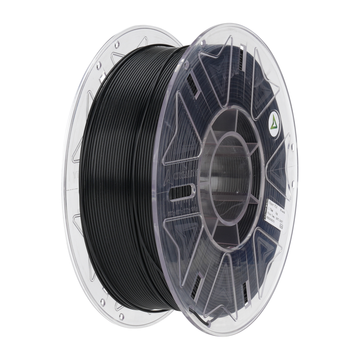
You want reliable prints, predictable lead times, and parts that fit without endless post-processing. That is exactly why it pays not to leave your choice of material to chance. With Polymaker you get a clear line of filaments that makes the step from prototype to functional part possible, without having to resort immediately to highly specialized materials. In this guide, we list the strongest applications for each material type and provide short, practical instructions for environment, settings, and storage.
Why choose consistent materials
A print is only as good as the weakest link in the chain. If tolerance, layer adhesion, or moisture management fluctuate, you get unpredictable results. Polymaker is known for neat diameter control, stable color ranges, and product lines that are logically structured: from entry-level and eco to engineering-grade variants with glass or carbon fiber. This makes scaling up easy. You establish one workflow and only switch material type if the application requires it.
PLA and PLA variants: Validate quickly, present neatly
For concepts, visual parts, and fit tests, PLA is often the shortest route. Choose a standard PLA for visual models and switch to a more impact-resistant variant if your part needs to withstand some stress. Within the Polymaker portfolio, you will find entry-level materials with pleasant flow and eco-options that are easy to sand and paint. Applications: housings for client presentations, fit gauges, ergonomics mock-ups, and lightly loaded clips. Tip: adhere to a clean, degreased bed, work with moderate cooling, and test one size-critical contour per part as a fixed check.
ABS and ASA: Functional and outdoors
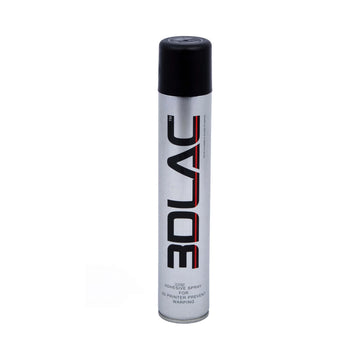
If the part must withstand impact, higher temperatures, or UV light, then you end up with ABS or ASA. ABS is strong and easy to post-process; ASA adds UV resistance for outdoor use. Think of clips for vehicle interiors, sensor housings, or fixtures. With these materials, an enclosed chamber helps prevent warping. Adhere with a suitable adhesive or sheet and keep your cooling flows low. With ABS or ASA from Polymaker, you can print structural parts with relatively light hardware, provided the environment is controlled.
PC and blends: Heat and structural rigidity
Polycarbonate and PC blends deliver high impact resistance and temperature resistance for covers, machine shields, and functional parts in warm zones. Here, predictable layer adhesion pays off, especially for parts with screw connections. Polymaker PC variants require a stiffer frame, higher nozzle temperatures, and preferably a chamber with a stable temperature. Use an adhesive suitable for high glass transition temperatures and lower the print speed where geometry is critical.
PVB for smooth display parts
When presentation and finish are more important than load, PVB is a solution. After printing, the material can be polished to a glass-like finish with suitable equipment. Ideal for trade show models, design mock-ups, and transparent demo covers. Polymaker PVB prints similarly to PLA, but benefits from slightly higher nozzle temperatures for smoother wall lines. Test your post-processing path on a small coupon and document times and distance to the surface for reproducibility.
Environment, storage, and repeatability
Many problems are not machine issues but material issues. Keep your filament dry in sealed containers or bags with desiccant. Note the first opening date for each spool and re-dry according to material guidelines when you see inconsistencies. Establish a base profile for each material type with nozzle temperature, bed temperature, line width, cooling, and speed. Add a short quality check for each part family: three critical dimensions, a photo of the first layer and the visible side, plus a note of the batch number. If you work with Polymaker across multiple lines, link your profiles to the exact product line name and color range so you can switch quickly without extra calibration.
Working methods that save time
Start each new part with a small verification: a 20-30 mm calibration disc for first-layer control and a simple tower for stringing or bridging, depending on the material. Document your first successful run and lock your slicer profile at that moment with a version number. For fiber-reinforced materials, replace your nozzle in time and set a threshold, for example after 2 to 3 kg. Set a maintenance rhythm in your calendar: degrease the print bed, clean the drive gears, check the guides, and note firmware settings after updates. This makes your results repeatable and keeps discussions with colleagues and customers factual.
Examples of strong matches between material and task
- Housing with clips for small electronics: PETG or ABS, with reinforcement ribs perpendicular to the line of force.
- Jig for drilling or sawing guidance: nylon with fiber reinforcement, 100 percent infill on contact zones.
- Machine cover in a warm zone: PC-blend, extra outer walls, and conservative speed.
- Outdoor sensor housing: ASA, matte finish, forced ventilation off, and long layer-times for tight layers.
- Soft-touch handle: TPU, grid infill in a diamond pattern for balance between grip and stiffness.
- Display model: PVB, thin layers and then controlled post-processing for a glass-like look.
Implementing with AC PRODUCTS
The shortest path to predictable prints is a small set of well-chosen profiles, linked to your most common applications. We help you select material per task, set up your base profiles, and establish a light quality control process. Consider a starter pack with PLA, PETG, ASA, PC, and a nylon composite, including clear cards with nozzle type, recommended line width, and storage advice. Furthermore, we can set up a drying and storage area with you so that your workflow remains intact even during busy weeks. This way, material selection becomes a planned step instead of a guess.
Conclusion: From material to result
Good hardware is important, but it is your material choice that determines whether you can deliver today or tomorrow. By starting with the context for each part and then choosing the appropriate filament, you gain control over quality, lead time, and cost price. The lines within the portfolio give you a clear palette: fast, tough, UV-resistant, heat-stable, flexible, or display-ready. If you choose consistently, 3D printing becomes a reproducible production process instead of a series of experiments.
View the extensive range and be inspired by AC PRODUCTS.


Leave a comment