


You want parts that fit, click together, and keep performing. Whether it is a clamp, a press-fit prototype, or a housing with screw points, predictability is crucial. This is where Polymaker excels: consistent extrusion, clean layer transitions, and a repeatable result you can trust. The result is less post-processing, fewer rejects, and a process that becomes scalable. It sounds like business, and that is exactly what it is. But above all, it feels reassuring when your print comes out of the chamber exactly as you designed it in your CAD model.
What makes filament stable in practice
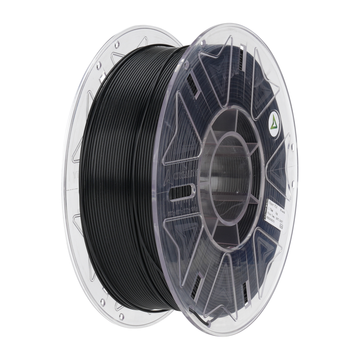
Stability starts with a uniform diameter, careful spool winding, and controlled raw materials. Equally important are moisture control and packaging. Polymaker pays attention to every link in this chain, and you will notice this while printing: the flow remains uniform, bridges sag less, and infill connects better to the perimeter. You see this immediately in the surface finish, but especially in dimensions and mechanical strength. You get cleaner holes, tighter edges, and parts that remain consistent even in production runs.
Consistency on the machine: From nozzle to chamber
A good choice of filament only truly works when machine settings cooperate. Polymaker is known for materials with a clear temperature window and reliable layer adhesion, which makes calibration easier. You first set the nozzle height and extrusion correctly, then find the layer height that suits your nozzle. Next, you fine-tune speed and cooling per geometry. Those who work this way see less stringing in open areas and better adhesion in solid zones. The result: fewer test prints and a faster route to a usable version.
Which line to choose and when
Within the Polymaker range, you will find material series that each offer a different balance of stiffness, toughness, temperature, and chemical resistance. Choosing becomes easier when you start with function, environment, and post-processing. Consider this logic:
- PolyLite PLA: sharp detail for prototypes and molds with low thermal load.
- PolyLite PETG: better toughness and moisture resistance, suitable for outdoor use with limited heat.
- PolyMax PLA: higher impact resistance for clips, clamps, and service parts that need some give.
- PolyMide nylon variants: dimensionally stable after proper drying, with high wear resistance for functional components.
- Polycarbonate lines: high temperature resistance and stiffness for housings and fixtures that get hot.
Design and tolerances: Thinking in terms of printability
Even good material cannot save a poor design. Therefore, design with printability in mind. Slightly round off internal corners to prevent stress peaks, choose gradual transitions instead of abrupt jumps, and take anisotropy per layer into account. In combination with Polymaker, you get parts that are less prone to cracking around screw holes and offer press fits without aggressive tolerance compensation. In doubt? Make a test strip with slots of different widths and place it next to your reference part. This allows you to calibrate to your own machine, not to assumptions.
Process control: Moisture, temperature, and finishing
Much of the quality loss stems not from the material, but from moisture. Store spools in a sealed box with desiccant and print directly from the box for hygroscopic materials. Polymaker reacts predictably when moisture is controlled: you hear less crackling, see smoother edges, and measure more stable dimensions. Temperature control helps just as much. A uniform chamber temperature and gentle cooling on critical layers result in stronger parts. Post-processing then remains functional: lightly scraping off burrs, sanding surfaces with fine grit, and, where useful, thermally inserting screw bushings for durable fastening.
Quality control that pays off
Measure what matters. Check eccentric dimensions with calipers or pin gauges and use a glass plate or granite reference for flatness. Label batches, machine profiles, and nozzle hours so you can later trace why something went well or less well. Polymaker makes it easy to work consistently per batch, meaning you do not have to keep searching for settings. That reproducibility pays off in small series and service parts: less variation, fewer rejects, and more confidence for your internal or external customer.
Sustainability and supply security
Sustainability is not just about recyclate. It is also about fewer rejects, less reprinting, and parts that last longer. By printing stably with Polymaker, you reduce material waste and energy consumption per successful part. Supply security counts just as much. When your material is predictable, you can keep inventory leaner and still deliver on time. That makes planning sharper and quotes more reliable. You notice it in your lead times and in the peace of mind on the shop floor.
Why AC PRODUCTS: From choice to result
A good end result requires not only the right filament, but also advice tailored to your application and machine park. At AC PRODUCTS, we help you make the right Polymaker choice and provide clear profiles as a starting point for your slicer. We think along with you regarding nozzle material, build chamber, drying solutions, and maintenance, so that your process becomes just as stable as your part. Do you want to switch from another filament to Polymaker or scale up your current workflow to series? We guide you from the first test to repeatable production, with a focus on measurable quality.
First-article inspection: Working traceably and preventing series errors
Finally, it is useful to periodically validate your workflow with a quick first-article inspection. For each application, establish reference values for mass, critical dimensions, and a simple tensile test on a standard coupon. Save photos and measurement data per batch, link them to nozzle hours and slicer profiles, and note any deviations. With such a light quality loop, you keep production risk low, work traceably for customers, and prevent small variations from growing into series errors.
View the extensive range and get inspired by AC PRODUCTS.


Leave a comment