


You may have already used up several spools of PLA or PETG from common suppliers, but lately, one name has been popping up more and more in print forums, YouTube reviews, and trade fairs: Polymaker. The Shanghai-based brand started in 2013 as a university R&D spin-off and has grown over the past ten years into a global player with its own polymerization labs, strictly controlled production lines, and a portfolio ranging from budget-friendly PLA to high-end PEEK composites. In this roughly 1,500-word article, you will get an in-depth look at the technical and business reasons why both hobbyists and industrial engineers are choosing Polymaker en masse.
Quality starts with raw material and pellets
Every good filament manufacturer buys granulate. Polymaker goes two steps further: the company manages its own compounding department, where virgin polymers are mixed with additives to influence crystallization degree, toughness, and heat resistance. This results, for example, in PolyMax™ PLA, which, thanks to a special nucleator, is stronger than standard ABS at a molecular level while still retaining the printability of PLA. You will notice this as soon as you perform a tensile or impact test: the breaking point is 15% and 20% higher, respectively, than conventional PLA brands.
Precise diameter control
Nothing ruins your print like a clog caused by a varying diameter. Polymaker uses laser measuring heads at three points along the extrusion line. The data is processed in real time; if a measurement deviates beyond ±0.02 mm, a closed-loop controller immediately corrects the pulling speed. You see the result in tight layers without under- or over-extrusion, even with a 0.25 mm nozzle. Less post-processing means lower labor costs and faster turnaround—a direct gain for your ROI.
Broader material selection without nozzle changes
You know the problem: flexible parts require TPU, heat-resistant parts require PC-blend, and visual parts require glossy PLA Silk. Polymaker provides all these variants but strives for uniform print parameters. For example, PolyFlex™ TPU95 prints at 220 °C and 30 mm/s, temperatures close to PolyLite™ PLA. You have to fine-tune profiles less often, which saves hours of debug time, especially in a production environment.
Pre-dried and vacuum-sealed spools
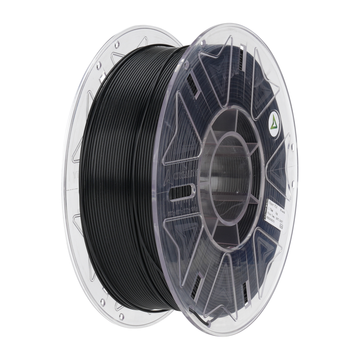
Moisture is the greatest enemy of smooth printing; it causes splattering, stringing, and brittle layers. That is why every spool from Polymaker only leaves the production line after it has been returned to less than 0.05% residual moisture in a special drying chamber. Subsequently, the roll is immediately vacuum-sealed with a four-gram silica gel packet. This careful packaging makes it possible to store filament for months without any issues, without having to dry it again first. This saves you both energy and time before the printer starts.
A bullet list, five convincing benefits
The filament distinguishes itself on five fronts that yield immediate practical benefits. It is compatible with both Bowden and direct drive extruders, so you do not have to change your hotend. A special anti-warp formula for ABS and ASA ensures tight first layers without curling, even without a heated chamber. Each spool features a scratch-resistant label with a QR code, useful for quick inventory management in the workshop. Moreover, complete material templates are already pre-configured in Cura and PrusaSlicer, so you spend almost no time on profile tuning. Finally, the manufacturer supports a collection program for empty spools, which reduces your waste stream and fits within a sustainability policy.
Sustainability without greenwashing
Many brands advertise biodegradable PLA but ignore the CO₂ footprint of production and logistics. Polymaker publishes Life Cycle Analyses per material family. PolyTerra™ PLA, for example, is mixed with biodegradable chalk filler; this reduces the polymer content by 15% and increases print strength. The cardboard spool—a first in the industry—saves 120g of plastic per roll. You can use these figures in your own ESG reporting or tenders.
Reliable mechanical data
Online, you often find "up to 20% stronger" claims without a test report. Polymaker has every batch undergo ASTM tensile tests at Bureau Veritas. The test results are in a datasheet with a lot number: you can see tensile strength, modulus of elasticity, and impact toughness. For engineering firms, this traceability is crucial to validate finite element analyses (FEA), for example, before a printed part becomes part of a machine.
Less downtime in series production
A client of AC PRODUCTS, a drone builder, switched from generic PETG to PolyLite™ PETG. Failure rates dropped from 8% to 1.5%. The reason: constant diameter and low-moisture packaging. Fewer failures mean less machine downtime and lower scrap costs. In three months, the company saved €1,800 on reprints—well over the price difference between B-brand and Polymaker filament.
Ease of use for educational environments
Schools and FabLabs want material that does not deter inexperienced users. PolyLite™ PLA prints odorless and on a cold glass plate; no glue or tape is needed. Polymaker also includes a comprehensive beginner’s guide with slicer screenshots, first layer tips, and troubleshooting. Teachers thus save precious lesson time that would otherwise go toward troubleshooting.
Training and technical support
If you order via AC PRODUCTS, you get access to monthly webinars with experienced process engineers. During these sessions, you can ask live questions about warping, layer adhesion, or slicer settings, share your G-codes, and receive adjusted parameters immediately. This hands-on after-sales model goes much further than the usual FAQ pages that other manufacturers limit themselves to, and guarantees that you can continue working quickly and efficiently.
Step-by-step implementation
For a smooth implementation, it is advisable to first map out your current print process: note failure percentages, post-processing time, and settings per material. Next, choose one representative part that is produced regularly and test the new filament under identical conditions. Then compare the results in terms of layer adhesion, dimensional accuracy, and mechanical strength. Calculate not only the material costs but also machine hours and any time saved in post-processing. If the figures are positive, you can scale the material step-by-step to other applications within your production or educational environment.
Innovation in fiber and metal composites
Do you want extra stiffness or ESD safety? Polymaker developed PolyMide™ PA6-CF (20% carbon fiber), which prints without a heated chamber but reaches a tensile strength of 95 MPa. PolyWood™ creates wood-like objects with micro-blastholes in PLA for 35% lighter weight—useful for cosplay or scale models. New is PolyCast™, a PVB-based filament for casting: it dissolves in isopropanol, allowing you to skip lost-wax casting.
Conclusion: A smart investment in quality and consistency
Anyone who prints in 3D regularly knows how important it is to be able to rely on stable results. Materials that perform predictably save time, frustration, and money. By choosing a supplier with proven reliability, high-quality raw materials, and clear specifications, you lay the foundation for a smooth print process. Whether you work in education, develop in a technical environment, or print products for end use: the right material choice makes the difference. Are you curious about what high-quality filaments can do for your workflow? Please feel free to contact AC PRODUCTS. We are happy to think along with you, offer support in material selection, and put together a test package so you can experience the difference yourself.


Leave a comment