


A 3D printer makes it possible for designers, engineers, and educational institutions to rapidly turn ideas into tangible objects. What was a sketch yesterday can be a functional prototype on your desk today. This speed shortens development cycles, lowers costs, and stimulates innovation, but only when you use the technology with a clear purpose. That is why successful printing starts with formulating a clear objective: do you want to test a concept, produce small batches, or integrate custom parts into existing processes? Once that is clear, you can choose equipment and workflows more effectively.
Choose the right technology for your application
Not every 3D printer works on the same principle. Fused Deposition Modelling (FDM) melts thermoplastic filament layer by layer, while Stereolithography (SLA) cures resin with light and Selective Laser Sintering (SLS) fuses powder particles with a laser. Each process has specific advantages and disadvantages. FDM is robust and affordable, SLA provides exceptional detail resolution, and SLS produces strong, non-porous parts without supports. AC PRODUCTS recommends first determining the requirements for tolerance, post-processing, and material properties; only then should you choose the 3D printer that best matches those needs.
Optimize the design before you start printing
A digital file suitable for machining is rarely ready for additive manufacturing immediately. With a 3D printer, you can gain efficiency through smart design tricks: avoid unnecessary solid surfaces, add reinforcement ribs, and position holes in such a way that support material is kept to a minimum. By incorporating hollow chambers, you save material and reduce print time without a noticeable drop in strength. Design software with integrated slicing simulations helps you with this; it allows you to see in advance where support is needed and how the thermal management behaves during printing.
Materials determine functionality
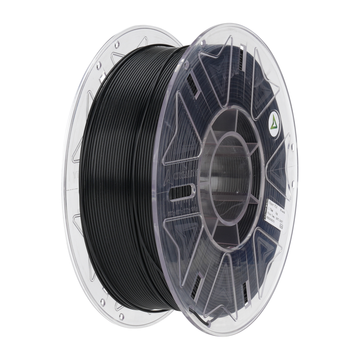
Polymers range from standard PLA to high-performance PEEK. For visual models, aesthetics are important, whereas for functional parts, wear resistance or heat resistance counts. A 3D printer can nowadays also process composites, for example, nylon with carbon fiber for extra rigidity. Test small quantities before starting large production runs; this way, you will discover which setting temperatures and cooling times provide the best balance between detail and mechanical properties. AC PRODUCTS recommends combining material data with practical tests so that you don't just rely on datasheet values, but know real-world performance.
Integrate software and workflow
Slicers, CAD packages, and process monitoring software together form the digital backbone of your production line. Choose a slicer that automatically adds batch numbers and revision codes so that every 3D printer in the network receives the exact same job. Then, connect the printer farm to a Manufacturing Execution System to minimize waiting times and monitor material consumption in real-time. A clear workflow prevents downtime because everyone can see exactly which task is next, which post-processing station is free, and which parts are ready for quality control.
Maintenance and calibration for reliable results
A well-adjusted 3D printer delivers consistent quality. Therefore, regularly check the nozzle temperature, build plate flatness, and Z-offset. Wear parts such as nozzles and gears must be replaced on time to prevent clogging. Document maintenance in a logbook; this allows you to see patterns in wear and proactively order parts. This saves on rush shipments and reduces downtime. An annual recalibration by a certified technician ensures that all axes remain square and that temperature sensors continue to measure accurately.
Safety and sustainability
A 3D printer generates ultrafine particles and volatile compounds, especially at higher print temperatures. Place the machine in a well-ventilated room or use a filter cabinet with activated carbon. Choose certified filaments without harmful plasticizers whenever possible. Energy consumption is a second point of attention; turn off printers during long breaks and use standby functions to reduce peak loads. By grinding and recycling residual material, you limit waste streams and reduce raw material costs in the long term.
From prototype to series production
Those looking to scale up from a few models to hundreds of units need reproducibility. A bulleted list is sufficient to outline the most important steps:
- Calibrate every 3D printer identically and register machine profiles in the slicer;
- Establish a quality control process with measurements and tensile tests;
- Automate post-processing, such as de-powdering or UV curing;
- Track parts via QR codes so that reprints proceed without errors.
This standardization makes it possible to have ten or a hundred printers running in parallel without tolerances diverging.
Keep experimenting and scale smartly
Additive manufacturing is developing at a rapid pace. New materials, higher print speeds, and hybrid processes in which CNC machining and printing are combined are appearing constantly. Therefore, keep space in your planning to run test clusters. This allows you to introduce innovation without disrupting ongoing production. A flexible 3D printer setup with modular upgrades gives you the chance to quickly respond to these innovations. This ensures your process remains scalable, profitable, and ready for the next step in product development.


Leave a comment