


You want to go from sketch to functional model faster without endless post-processing. You also want predictable quality, so that every iteration is truly comparable. With a Bambu Lab printer, you close the gap between design and execution. The result is simple: shorter lead times, lower failure costs, and a team that dares to make decisions based on tangible prototypes instead of assumptions. Imagine making a change in the morning and being able to test the part under load that same afternoon. That is the difference between hoping and knowing.
Iterate quickly without compromising on precision
A Bambu Lab printer combines speed with consistent print quality. Higher print speeds are only useful if detail retention and dimensional tolerances remain intact; that is exactly where the value lies. In pilots and customer tests, a Bambu Lab printer provides you with a physical model within the same day that fits, clamps, and hinges as intended. This allows you to test fits, clicks, cable routing, and ergonomics in the context of the final product. Less waiting time means more variants and better choices. In development processes, this translates to fewer revision rounds and less rush work outside office hours.
Calibration and repeatability as standard
Prototyping does not require show runs but reproducible results. That is why automatic calibration is crucial: nozzle height, bed leveling, flow, and the first layer are set reliably, time after time. Because a Bambu Lab printer automates calibrations, you need less manual fine-tuning and the chance of user errors decreases. The first layer adheres, corners remain sharp, and weld seams between perimeters close consistently. That is not only pleasant to the eye, it also determines the strength of the part and the predictability of your dimensions.
Materials that matter in real-world applications
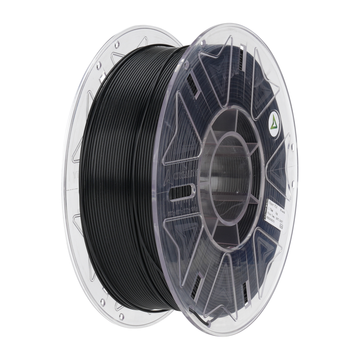
From PLA for quick concepts to PETG and ASA for outdoor use, and from flexible TPU to filled materials for stiff, lightweight parts; your choice of material determines the practical application. With a Bambu Lab printer, you work effortlessly with standard 1.75 mm filaments and can make the transition to more technical polymers as soon as the project requires it. Think of housings, clamps, jigs, assembly aids, or air ducts that need to be able to take a beating. For color coding, internal supports, or soluble supports, the ecosystem also offers multi-material options, so you combine functionality and finishing without extensive post-processing. This keeps the model representative and your planning realistic. The step from concept to pre-series becomes shorter because a Bambu Lab printer serves both the aesthetics and the functional requirements.
Workflow and software that suits a modern team
A printer is only productive if the software cooperates. A Bambu Lab printer fits into a modern workflow with clear profiles, version control of slicer settings, and well-organized queues. You set up tasks, prioritize, and see progress without having to stand next to the machine at all times. Remote monitoring helps with longer jobs; this keeps production running while your team continues to work on design and verification. The result: fewer context switches, fewer lost hours, and more focus on engineering decisions that add value.
Uptime, safety, and maintenance in daily use
Downtime costs time and trust. With a Bambu Lab printer, practical sensors, neat cable routing, and logical service points ensure predictable maintenance. Filament-end detection, neat spool changes, and protection against environmental influences reduce failures. A clear error message and a consistent recovery strategy ensure that you resolve malfunctions effectively. Your team quickly learns which checks are useful before starting a long print and which parts benefit from a quick test print. This keeps utilization high and prevents a small hiccup from disrupting your planning.
TCO and business case: Where the profit comes from
The investment in hardware is visible, but the real profit lies in time. Fewer rejects, less post-processing, and less waiting time between iterations count for more than you think. The business case for a Bambu Lab printer relies on lead time reduction, reliable dimensions, and the ability to test more design variants within the same budget. Add to that lower outsourcing costs and fewer rush deliveries, and you can see why engineering teams quickly earn back this choice. You work more calmly, decide faster, and deliver more predictably.
Checklist: What to look for when purchasing via AC PRODUCTS
Make your choice concrete with a short, practical checklist that we use daily with clients:
- Purpose per device: concept, functional prototype, or pre-series
- Core materials now and in 12 months, including any filled filaments
- Required tolerances and minimum feature size of critical parts
- Required build volume and realistic utilization per week
- Software workflow: profiles, version control, permissions, and queues
- Maintenance package, spare parts, and support response times
- Securing color, traceability, and documentation for audits
Why AC PRODUCTS
You do not want a gamble but a solution that fits your workplace. We set up profiles for your materials, validate critical parts together with your team, and provide clear documentation for transferable use. If you choose a Bambu Lab printer via AC PRODUCTS, you choose certainty in technology, inventory, and support. We think along with you regarding filament inventory management, advise on drying and storage conditions, and help you set up a simple but effective quality control system. This way, you benefit from stable output and predictable planning from week one.
More details and products can be found at AC PRODUCTS.


Leave a comment