


Technical lessons come to life as soon as ideas become tangible. For students, few things are as motivating as a sketch that sits on the table as a real object that same afternoon. That is exactly where the PLA filament 3D printer shines: safe, accessible, affordable, and didactically strong. In this guide, AC PRODUCTS shows why this type of printer is suitable for primary, secondary, and vocational/higher education, and how you can keep the learning curve short and the results high with a few practical choices.
Why PLA works in the classroom
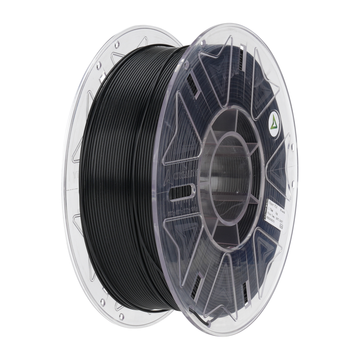
With a PLA filament 3D printer, you don't have to reinvent the wheel. PLA melts at a relatively low temperature, adheres predictably, and hardly smells during printing. That means fewer requirements in the classroom (no heavy ventilation or closed print chambers needed), fewer failed prints, and therefore more teaching time. Moreover, PLA is biobased and available in many varieties, from standard colors to wood and glitter looks, giving you immediate choices for design and presentation as well.
Technical simplicity = didactic focus
While complex materials often require specialized hardware, the operational burden of a PLA filament 3D printer remains low. You can therefore focus where you want to didactically: on designing, testing, improving, and presenting. Students learn to iterate: one prototype, feedback, adjustment, second prototype. The conversation turns to dimensions, tolerances, strength in the print layer direction, and responsible material use—core subjects for technical and science classes, without the lesson getting bogged down in troubleshooting.
Continuous learning path: From grade 5 to vocational education
Introduction (grades 5/6): simple shapes, name labels, small construction kits. In secondary education (lower years), the focus shifts to geometry, connections, and physics experiments (weight, buoyancy, lever). Upper years: functional prototypes, housings for microcontrollers, mechanical couplings. In vocational/higher education: tooling, molds, assembly aids, and presentation models for real clients. The PLA filament 3D printer is the same reliable basis in all these phases; you raise the didactic bar by deepening the assignments and reflection.
Quality without the hassle: How to keep control (a short summary)
- Three fixed profiles. Detail (0.12-0.16 mm), all-round (0.2 mm), robust/fast (0.28-0.32 mm). Fewer variables = more predictability.
- First layer is king. Degrease the bed, check the Z-offset, first layer slower and slightly warmer. Getting it right once = smooth sailing for the whole print.
- Orientation = strength. Place tensile or bending direction transverse to the layer lines where possible; more perimeters for more infill.
- Material discipline. Rolls labeled (project/class), kept dry and dust-free in a bin with desiccant. PLA is forgiving, but clean material always prints better.
- Divide slicer tasks. One or two “operators” per class understand supports, perimeters, and infill; the rest focus on design and reflection.
- Logbook. Note material, nozzle/bed temp, and special details. The next class immediately benefits from what the previous one learned.
Common misconceptions cleared up
“You can't make anything strong with PLA.” It depends on design and orientation. With 3-4 perimeters, good layer direction, and smart ribs, school applications (clips, housings, holders) are perfectly achievable, and you can continue to print safely in an open classroom. For extreme heat or long-term creep, you can choose another material later, but for 90% of education, the PLA filament 3D printer is just right. “PLA is ‘too simple’ for vocational schools.” On the contrary: precisely because the process is predictable, you can teach deeper in vocational/higher education about tolerances, fits (press/interference fits), inserts, threads, and post-processing. This way, you train craftsmanship without material behavior overshadowing the lesson goal.
Assessment: To measure is to know
Create rubrics that reward design choices, printability, and reflection. Not every part needs to be perfect; the learning goal is insight into cause and effect. Have students review each other's work: how was the support removed, how neat are the perimeters, how logical is the orientation? With a PLA filament 3D printer, that quality control is visible and discussable, allowing you to assess more objectively than with just a report.
Sustainability and responsibility
Because PLA is biobased, there is a temptation to “just print a lot.” Keep it conscious: design for minimal support, reuse scraps (small practice shapes), and make “design for print” an explicit subject. This way, students discover how to design stronger parts with less material. That is sustainable thinking, applicable far beyond the PLA filament 3D printer.
AC PRODUCTS: Partner in predictability
You don't want a hobby project, but an educational solution that works. AC PRODUCTS helps you with selection, installation, and creating three solid starting profiles. We provide short manuals for teachers and students, plus a compact quality grid for assessment. Prefer to be taken care of? Then we will arrange periodic service, nozzle and filter changes, and a material subscription that fits your usage rhythm. This way, your PLA filament 3D printer doesn't remain an “appliance in the corner,” but the beating heart of your making curriculum.
Conclusion: Starting low-threshold, learning high-quality
The step from idea to object is worth gold in education. A PLA filament 3D printer makes that step safe, affordable, and predictable so that you can spend your time on learning instead of peripherals. Set up the process simply (three profiles, first-layer routine, logbook), connect assignments to learning goals, and let students reflect on their choices. AC PRODUCTS is happy to help you think about the best set-up for your school or training program. In this way, 3D printing becomes not a separate gimmick, but a structural accelerator of technical and creative learning—today in the classroom, tomorrow in practice.


Leave a comment