


When investing in a professional 3D printer, you want to iterate faster without the added risk of tolerance errors. The Bambu Lab X1 Carbon combines a top speed of 500 millimeters per second with a positional accuracy of just seven microns. As a result, you can complete functional prototypes in hours rather than days, while the dimensional accuracy is comparable to traditional CNC machining. The closed build volume stabilizes temperature and humidity, ensuring that hygroscopic polymers do not warp. This way, your productivity increases without complicating quality control.
CoreXY architecture accelerates every movement
At the heart of this performance level is a smart CoreXY mechanism. The print head of the Bambu Lab X1 Carbon hangs crosswise on two synchronous belts, which drastically reduces the moving mass. This makes accelerations of up to twenty meters per second squared achievable without visible ringing on the outer walls. A rigid aluminum frame prevents torsion and keeps each layer exactly above the previous one, even during continuous zigzag movements. This allows you to achieve surfaces directly suitable for assembly testing with the same G-code settings.
Lidar sensor and AI camera monitor the process
High mechanical speed is useless without reliable feedback. That is why the machine combines a lidar module that measures the first layer at a seven-micron level with a 1080p camera that compares the entire build process with the original model. If the lidar detects a deviation, the system corrects the Z-offset; if the camera detects spaghetti or delamination, the printer pauses and sends a notification to your phone. With this dual security, the Bambu Lab X1 Carbon reduces material waste and saves you time that was previously spent on repair prints.
Carbon-reinforced frame tames vibrations
To eliminate vibrations, the X-axes are made of carbon-reinforced composite and the Y-guides run on low-mass steel rails. The result is a platform that can handle critical jerk values without resonance artifacts. In complex curves, nozzle movements remain tight, keeping surfaces smooth and corners sharp. Even with glass- or carbon-fiber-filled polymers, the system retains its dimensional stability. Lower stress on motors and belts extends service life and reduces maintenance costs.
Multi-material production via modular AMS
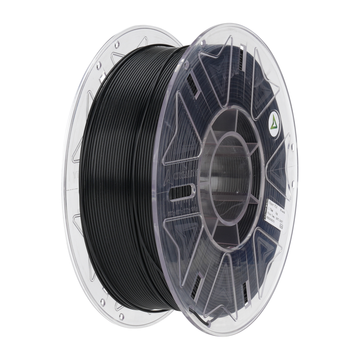
Color and material combinations are easily added with the Automatic Material System. One module offers four spool slots; stacking them makes sixteen filaments possible without manual changing. The AMS recognizes spool length, moisture content, and specific drying temperatures, actively drying sensitive polymers to prevent breakage and air pockets.
- Up to sixteen filament positions per machine
- Automatic detection of spool length and moisture
- Material switching without human intervention
For you, this means uninterrupted printing in flexible TPU, rigid PA-CF, and transparent PETG within a single job. Thanks to this workflow, the system outperforms competitors in ease of use and production speed.
Software, cloud, and sensors increase uptime
Efficiency doesn't stop at hardware. Bambu Studio provides pre-calibrated profiles for flow rate, pressure advance, and input shaping, and synchronizes print jobs via the cloud. This allows you to manage queues, start tasks remotely, and receive notifications upon completion or error detection. In addition, a network of filament runout sensors, thermal fuses, and an active chamber fan monitors every print cycle. Beyond the standard interface, Bambu Studio features an API that allows you to link multiple printers into an automated production line. Material tracking, task priority, and progress are stored centrally, so your ERP system knows exactly when parts are ready. Analyses of print logs make preventive maintenance plannable to the hour.
Maintenance, cost savings, and sustainability
Preventive maintenance takes an average of thirty minutes per month: re-tensioning belts, lubricating axes, and changing HEPA filters. The interior and hotend are modular, keeping downtime to a minimum. Lower rejection rates due to consistent quality reduce material and energy costs and decrease CO₂ emissions. Compared to conventional FDM printers, you save up to forty percent in electricity thanks to shorter build times and more efficient power regulation. Calculated annually, the platform delivers a payback period of less than eighteen months through saved labor time, reduced outsourcing costs, and less material loss. The noise level remains below fifty decibels, allowing for placement in office environments without a separate machine room.
Practical example at AC PRODUCTS
AC PRODUCTS implemented four units in a cell setup. Our design-to-test cycle for a housing in carbon-nylon dropped from five working days to one. The printer makes the structural shell, a TPU seal, and a transparent window in succession without operator intervention. Post-processing is limited to support removal and light blasting. Consequently, prototyping speed tripled while lead time decreased by eighty percent. Customers now receive a functional model within 24 hours, leading to faster decisions and higher customer satisfaction.
Conclusion: Speed without compromise
In summary, the Bambu Lab X1 Carbon shows that high speed and high precision are no longer opposites. The interplay of CoreXY motion, carbon-reinforced axes, lidar feedback, and modular multi-material functionality delivers a reproducible end result. For development teams looking to accelerate their innovation cycles without loss of detail, the printer is the logical choice. With the Bambu Lab X1 Carbon, you are not just investing in equipment, but primarily in a predictable workflow, lower costs, and a solid lead over the competition.


Leave a comment