


You are sitting behind your CAD screen, bursting with ideas, and want to see if your concept really works before the end of the day. That is exactly where the 3D printer proves its value: instead of waiting for an external model maker, you print the design yourself and immediately test form, fit, and ergonomics. That convenience explains why engineers, product designers, and ambitious hobbyists now organize their workflow around additive manufacturing.
Iterating faster than ever
Traditionally, the development cycle consisted of a digital sketch, an outsourced prototype, transport, review, and revision. Each of those steps took days to weeks. With your own 3D printer, you replace that entire chain with one action: slice, start, wait, and grab. Within a few hours, a tangible model emerges that colleagues or clients can assess immediately. You incorporate feedback directly into the next version, allowing projects to achieve an average of two to three more iterations in the same timeframe.
Material diversity as design freedom
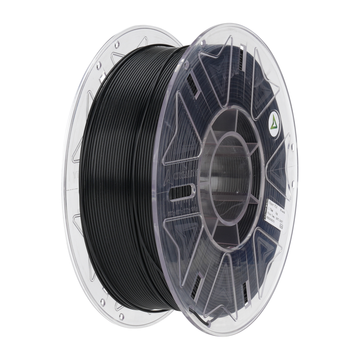
While the first generations mainly used PLA and ABS, you now print in flexible TPU, transparent PET-G, or glass fiber-reinforced nylon. Each material type offers unique properties regarding stiffness, heat resistance, or wear resistance. By matching the 3D printer to the right filament, you can make everything from functional drone housings to medical splints in a single workspace. This versatility avoids costly switches to other production techniques and stimulates experimentation: you don't have to wait for an external supplier to try a new material.
Complexity at no extra cost
In CNC milling or injection molding, the cost increases as the shape becomes more complex: undercuts, internal channels, and organic surfaces require extra processing or multiple molds. For the 3D printer, geometry hardly matters; it builds layer by layer and automatically fills empty spaces with supports. This allows you to design lightweight lattices, integrated hinges, or cooling channels that are unachievable or unaffordable in conventional processes. The result is better performance without financial risk.
Cost control and less waste
Ordering a prototype from an external agency means transport, margins, and often a minimum order quantity. If you print in-house, you only consume material where the product actually exists. With many plastics, you can grind and re-extrude leftovers, which reduces raw material costs. Moreover, direct control over the 3D printer prevents miscommunication: you discover every error in your own workshop, not after delivery of an expensive mold.
Core benefits at a glance
- Lead time drops from weeks to hours.
- Choice of material makes function-specific prototypes possible.
- Complex geometry causes no extra financial pain.
- Local production reduces transport and CO₂ emissions.
- Waste reduction through precise dosing and recycling of filament.
Education and knowledge sharing
Design schools and fab labs use the 3D printer as a didactic tool; students experiment with tolerances and support strategies without making expensive mistakes in metal or composite. In professional teams, the printer shortens discussions: a prototype on the table speaks more to the imagination than a render on the screen. This creates support for innovative forms and techniques that are otherwise difficult to sell to non-technical stakeholders.
Sustainability in practice
Additive manufacturing uses only the amount of plastic the model requires, unlike subtractive processes where up to sixty percent waste can occur. If you combine this with biodegradable PLA or recycled PET-G, the 3D printer reduces the ecological footprint of both the prototype and the final product. Local manufacturing also means fewer transport kilometers and shorter chains, which ensures supply security in uncertain times.
Things to consider when purchasing
Not every project requires a high-end SLS machine; sometimes a reliable FDM desktop printer suffices. Determine in advance exactly what you want to print: think about build volume, layer height, tolerance, and material compatibility. Pay attention to ease of maintenance; automatic bed leveling and a dry storage chamber for hygroscopic filaments save a lot of time. AC PRODUCTS offers brand-independent advice and helps you choose the right 3D printer based on a viable payback period.
Outlook: AI-slicing and multi-material
Software suppliers are integrating artificial intelligence into slicers that automatically determine the optimal print parameters, which lowers failure rates. In parallel, machine builders are developing print heads that can switch from flexible to rigid material during a single task. The 3D printer is thus evolving into a platform on which form, function, and material merge in one step—essential for robotics, wearables, and medical applications.
Conclusion
Whether you are working on a consumer product, architectural model, or industrial fixture, the 3D printer accelerates development, reduces costs, and opens creative possibilities that traditional methods limit. By printing in-house, you save time, money, and the environment, while staying one step ahead of the competition with faster iterations and custom features. AC PRODUCTS supports you from selection to maintenance, ensuring you get the most out of this indispensable link in the modern design chain.


Goededag,waar kan ik een Nederlandse beschrijving vinden van de 3 d printer p13
M.v
G sylvia
Leave a comment