


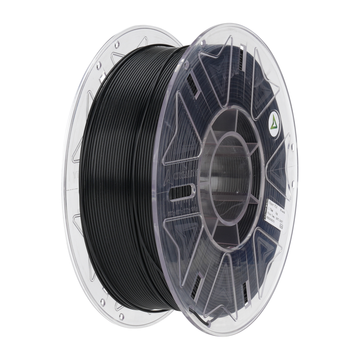
You want parts that do what they are supposed to do, without endless tweaking or unexpected breaks. That is precisely why good 3D printing does not start with the printer, but with the material. The right filament determines adhesion, dimensional accuracy, appearance, and longevity, and therefore also your costs and lead time. This guide provides a down-to-earth, practical compass: how to make choices based on function, environment, and process, with as little hassle as possible during printing.
Start with the function, not the brand name
What does the part need to withstand? Is it exposed to moisture and UV outdoors, does it come into contact with oil or cleaning agents, does it need to snap into place or provide damping? If you clearly define your requirements, you can pair them with the most suitable filament. Think in terms of requirements, not labels. A housing that needs to look neat requires something different than a bracket that vibrates day in and day out, or a pipe adapter exposed to body heat and water.
Four profiles that cover 80 percent of jobs
The four material profiles below cover the majority of daily practice. They provide direction without locking you in.
- PLA: rigid, stiff, easy to print and ideal for display models, fit tests, and tooling that does not get hot. Low shrinkage and a neat surface finish. Less suitable for outdoors or long-term hot areas.
- PETG: tough, low-gloss to semi-matte, more forgiving with adhesion and cooling than ABS. Good for functional parts that take a few knocks or deal with water. Can string, so carefully tune retraction and temperature.
- ABS/ASA: higher heat resistance, easy to machine and glue. ASA wins outdoors due to UV stability. Requires a warm, draft-free environment and controlled cooling to prevent warping.
- TPU: flexible, wear-resistant, and shock-absorbent. Think of feet, sealing lips, protectors. Requires low speed, limited retraction, and clean filament routing.
For demanding parts: PA, PC, and blends
If the load is serious, look at nylon families (PA) and polycarbonate (PC). PA offers excellent toughness and wear resistance; PC provides stiffness and heat resistance. This class of filament usually requires a closed enclosure, higher nozzle temperatures, and dry material. Blends such as PA-CF or PC-blend provide predictable stiffness with less shrinkage, provided you use a suitable nozzle and chamber conditions.
Environmental factors: Outdoors, chemistry, temperature
Where will the part live? Outdoors requires UV-stable choices like ASA or coated material; for cleaners and oils, think about chemical resistance. For hot covers or machine interiors, the glass transition temperature is leading. When in doubt, a UV-stable filament with proven chemical tolerance is the safest route. Also, watch out for assembly: a clip exposed to the sun can get warmer on a summer day than you might expect.
Dimensional accuracy and tolerances
Printing with dimensional accuracy is a combination of material behavior and calibration. Keep layer height and wall thickness consistent, calibrate flow with a single-wall test piece, and check critical dimensions early. PETG creeps toward sharp corners with too much cooling, while PLA maintains corner detail but can become brittle in thin tabs. Minimize support by choosing orientation wisely, especially for snap-fits.
Process reliability: Temperature, cooling, and speed
Every filament has a working window. PLA loves firm part cooling and moderate nozzle temperatures, while PETG prefers less air and slightly more heat for layer adhesion. ASA and ABS thrive in a warm chamber with metered cooling and slow cooling down. Connect temperature, cooling, and speed: higher speed often requires just a bit more heat, and thin walls tolerate less fan speed. Work in small steps and change one parameter at a time.
Reinforced and abrasive: Think about your nozzle
Carbon-fiber or glass-fiber-filled filament provides a beautiful combination of stiffness and dimensional stability, but it wears out brass nozzles quickly. Use hardened steel or ruby tips and count on slightly higher temperatures. Fillers dampen stringing but increase the chance of nozzle clogs if you print too cold or too slowly. Keep the filament path clean and replace PTFE guides in time.
Costs and total cost of ownership
Cheap is not always cost-effective. Less waste, less post-processing, and higher first-time-right rates quickly outweigh a lower roll price. A more expensive filament can turn out cheaper per part if you reduce support, eliminate post-treatment, and shorten print time through higher reliable speeds. Calculate per project: what does material choice do to print duration, rejection, and assembly?
Choosing in five minutes: A mini-protocol
First, determine the function and environment, then establish three requirements: strength or toughness, heat or UV resistance, and finish. Choose the closest material profile and print a small test part with varying overhangs and a critical dimension. Evaluate appearance, size, and snap-fit behavior. Only then adjust parameters. If in doubt, ask AC PRODUCTS for a short test print with the intended filament and advice on nozzle, cooling, and drying strategy.
How AC PRODUCTS helps you
You do not have to guess. We translate your application into a material choice, provide clear settings per printer family, and take care of test prints when that makes sense. Whether you are making serial tooling, presenting display models, or mounting functional parts in a warm cabinet, you get a recipe that works. This makes material choice predictable, allowing you to get more out of your machine park with less rework and less downtime.


Leave a comment