


You might think you need thousands of euros to purchase a serious 3D printer. Yet, Creality machines have been proving the opposite for years. They combine a generous build volume with open-source firmware, and they do so for a fraction of the price of high-end brands. The secret? Smart mass production, a massive community, and continuous firmware updates that are available for free.
Model selection: From hobby to semi-pro
Within the Ender line, you will find compact entry-level models like the Ender-3 V3, ideal for schools and start-ups. For larger objects, there is the CR-10 series with a print range of up to 300 × 300 × 400 mm. Do you want to print in an enclosure to handle ABS or ASA without warping? Then the K1 series is a logical step. Every model feels familiar thanks to the same menu structure and Marlin base, ensuring that future upgrades connect effortlessly.
Mechanical construction and maintenance
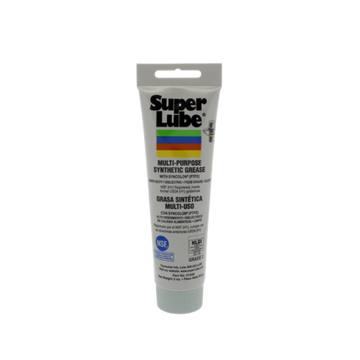
Aluminum V-slots, steel hotends, and direct-drive extruders form the core of the latest generation. That provides not only stable prints but also ease of maintenance: lubricate the linear rails after 300 hours and you are done. Replaceable nozzles cost a few euros and are available everywhere, which keeps the total cost of ownership low.
Firmware freedom
By default, the printer runs on a modern Marlin build with adaptive stepper algorithms. Those who want more speed can easily flash Klipper for input shaping and accelerations of up to 15,000 mm/s². This is how you get professional performance out of hardware that officially sits in the mid-range segment.
Expanded material range
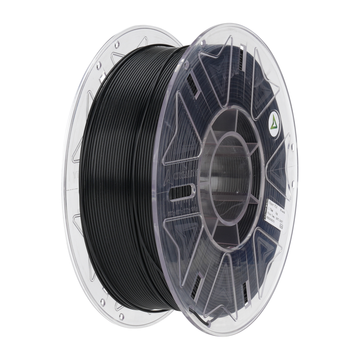
With a nozzle temperature of up to 300 °C and a bed that reaches 110 °C, you can print PLA, PETG, flexibles, and even nylon. A hardened nozzle makes it possible to experiment with carbon-filled filaments without extra investment in industrial machines. Creality remains relevant as your project scale grows.
Price versus functionality
An Ender-5 S1 costs less than € 500 and achieves accelerations that were exclusive to devices over € 2,000 five years ago. You therefore save budget that you can invest in quality filament or a filament dryer, elements that have a direct impact on print results. For many small businesses, that calculation weighs more heavily than marginal accuracy gains in more expensive alternatives.
Service and warranty in the Benelux
AC PRODUCTS offers a two-year carry-in warranty, replacement parts from our own stock, and Dutch-language support. Because many parts are modular, a machine rarely needs to be returned completely; a new sensor or driver board can often be installed within two days.
Tip: register your printer's serial number immediately after purchase; firmware updates and spare parts will then automatically link to the correct model.
Summary of five quick upgrades
- PEI build plate for better layer adhesion.
- Silicone sock to limit temperature fluctuations.
- OctoPrint for remote monitoring and time-lapse videos.
- Hardened nozzle for abrasive filaments.
- Foot dampener pads to reduce resonance.
When should you look further?
Do you print parts daily that require medical certification, or do you work with PEEK? Then specially designed high-temperature printers are necessary. In all other cases, Creality provides more than enough accuracy for functional prototypes, cosplay parts, and small production series.
Practical example: Design agency
An Amsterdam-based design agency replaced two outdated premium printers with four Ender 5 machines. By printing in parallel, the lead time for model parts was halved. The total investment was 60% lower than a single high-end replacement, while the printing speed per object only decreased by 10%. The result: faster iterations, satisfied clients, and budget left over for refined post-processing.
A look at the future
The manufacturer is investing heavily in AI cameras that detect warping and in Core-XY platforms with speeds exceeding 500 mm/s. This means that your current machine partially grows along with future developments through firmware updates, while new models come even closer to industrial specifications. Creality thereby positions itself as the link between the hobby market and the professional environment.
Total cost of ownership
Electricity consumption, maintenance parts, and nozzle wear eventually count more than the purchase price. An Ender-3 consumes approximately 45 W; at 1,500 print hours per year, that amounts to about € 70 in electricity. Add € 30 for maintenance and € 350 for depreciation, and your TCO remains very low. A comparable industrial printer can cost five to six times as much during the same period.
Conclusion
Anyone looking for a balance between affordability and performance will almost naturally end up with Creality. Thanks to open-source firmware, a gigantic community, and easily obtainable parts, you are assured of fast learning curves and low downtime. AC PRODUCTS helps you with demonstrations, workshops, and a stock of spare parts, so that you can continue immediately if something goes wrong. Are you ready to turn your ideas into tangible prototypes without exceeding your budget? Then make an appointment in our showroom and experience for yourself how a Creality printer performs from the first layer to the detailed final print.


Leave a comment