


A professional appearance, reliable prints, and still having money left over in your investment budget—that sounds like an impossible combination, but an increasing number of design studios, educational institutions, and start-ups are discovering that it is possible. Over the past five years, Creality has established itself as the price-performance champion of the desktop 3D printing market. Where competing brands are hundreds of euros more expensive or compromise on build quality, Creality delivers machines that are robust, expandable, and community-friendly. Every month, AC PRODUCTS installs dozens of units for clients creating prototypes, running small-batch production, or setting up educational programs. In this guide of approximately fifteen hundred words, you will discover why Creality is such a smart choice, what models are available, how to avoid hidden costs, and how to get the most out of the ecosystem without needing an engineering degree.
Price-breaker or mature production tool?
The "budget printer" label can be misleading. If you buy a random cheap kit, you will spend days calibrating, print test cubes that fail, and hear the frame creak as soon as you increase the speed. Creality has largely broken this stereotype. From the Ender 3 V3 to the CR-10 Smart Pro, you will see a stable steel construction, ground linear rails, and a 32-bit mainboard with silent TMC drivers. The firmware is open-source Marlin, but with pre-configured safety features such as thermal runaway. You don't have to reinvent the wheel, but you aren't tied to closed software either. Thanks to this balance between open architecture and factory tuning, Creality has become the "Volkswagen Golf" of the print landscape: accessible in price, but serious in performance.
Speed and build area without sacrificing quality
A frequently asked question is whether it is better to buy a compact box for accuracy or a large volume for prototypes. Creality bridges this gap by combining Core-XY mechanics in its flagship models with a 300 × 300 × 300 mm build volume. The Core-XY setup distributes mass more efficiently: the print head moves in a cross-tensioned belt network, while the bed moves only in the Z-direction. This allows you to accelerate at 200 mm/s without ring artifacts. AC PRODUCTS has demonstrated test prints with PA-CF at a 0.12 mm layer height with less than 0.05 mm dimensional deviation across the full X-axis—a result that was, until recently, reserved for machines three times as expensive. The step up to truly large enclosures or design prototypes is no longer a dream.
Material palette from PLA to engineering-grade fibers
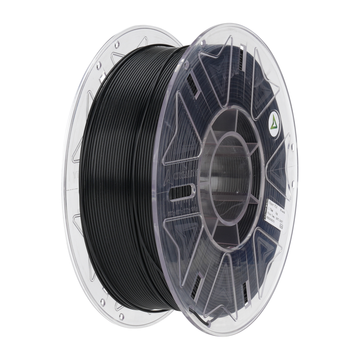
Thanks to an all-metal hotend that can handle temperatures up to 300 °C, combined with a heated bed of 100 °C, the machine can easily switch between a wide range of filament types. For simple concept models, you can use PLA or PETG, while ABS-plus and polycarbonate are suitable for heat-resistant applications. If you want lightweight yet rigid components, fiber-reinforced nylons offer the desired mechanical properties. The direct-drive extruder system minimizes backlash; as a result, flexible materials like TPU with a Shore hardness of 95A come out as smoothly as standard PLA. This versatility makes it possible to print both elastic gaskets and rigid housings on one and the same platform, without changeover time or extra hardware adjustments.
Community power: Mods, profiles, and fast help
A key asset is the massive user community that constantly shares new profiles, firmware patches, and print accessories. Every conceivable modification—from an air duct that cools overhangs more tightly to a cable cover that extends the life of the wiring—is usually available as a free STL file. Furthermore, ready-to-use slicer settings for various materials circulate in forums and Git repositories, so you don't have to endlessly fine-tune them yourself. This collective innovation power saves you time, prevents failed prints, and allows the system to evolve rapidly with your needs. Should you get stuck, solutions can usually be found within minutes, complete with photos and step-by-step explanations.
Hidden costs? There are hardly any
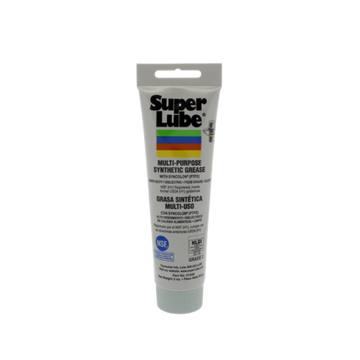
Some budget printers lure you with a low purchase price but then charge for brand-specific nozzle kits or software licenses. With Creality, consumables (nozzle, PTFE tube, glass plate) are well under thirty euros per set, and slicer software like Cura or PrusaSlicer is free. Maintenance is limited to occasional lubrication with PTFE grease and a new nylon zip-tie for the cable chain when it wears out—costs that you can easily cover at the local hardware store. If you compare the total cost of ownership over three years, Creality turns out to be on average forty percent cheaper than a closed system of the same build size and print speed.
A clear bulleted list: how to quickly make the right model choice
- Ender 3 V3 SE entry-level model, 220 × 220 × 250 mm, ideal for schools and hobby prototypes.
- Ender 3 S1 Pro direct-drive, 300 °C hotend, flexible-material friendly, plug-and-play for design studios.
- CR-10 Smart Pro 300 × 300 × 400 mm, Wi-Fi, integrated camera monitoring, perfect for R&D departments.
- CR-M4 450 × 450 × 470 mm, Core-XY, steel timing belts, suitable for small-batch production of housings.
- Halot-Mage (resin) 10.3-inch 8K LCD, for ultra-fine jewelry or dental models.
Installation and training package by AC PRODUCTS
Purchasing is step one; operational use is step two. AC PRODUCTS delivers every Creality printer ready for use: unpacking, checking the frame, upgrading firmware, performing a first-layer test, and configuring the slicer profile on your laptop. During a three-hour workshop, you will learn bed leveling, changing nozzles, setting filament tension, and understanding slicer variables. A digital handout with step-by-step photos minimizes learning curves for new team members. Our service desk is available seven days a week for quick questions, ensuring that downtime never becomes a roadblock.
Thinking sustainably with modular maintenance
Where many printers are destined for recycling in the event of a defective motherboard or worn ball screw, Creality opts for a modular design. You can replace a heatsink, stepper motor, or fan individually thanks to plug connectors and standardized screw sizes. This significantly extends the service life; a five-year-old CR-10 is simply a matter of nuts and bolts away from being "like new." Less electronic waste, lower raw material consumption, and long-term savings—all strong arguments for environmentally conscious investors.
ROI example from practice
A design agency in Utrecht recently switched from externally printed prototypes to production on their own studio floor. By running two mid-sized FDM machines in parallel, model costs dropped from an average of €90 to less than €8 in material per piece. The investment in hardware, accessories, and a short training session was earned back within twelve weeks, partly because the lead time dropped from three days to a single night. Extra iterations could now be added quasi-for-free, allowing the team to reach a final design faster and helping clients make decisions more quickly.
Conclusion
Those who dare to think big but have to work with a tight budget will find an exceptionally efficient partner in Creality. From sleek design and fast Core-XY kinematics to open-source firmware and low consumables costs, the brand proves that affordability is not synonymous with compromise. AC PRODUCTS adds professional installation, training, and maintenance to this, allowing you to focus on what matters: turning ideas into tangible prototypes or final parts. Invest in a Creality printer and experience how design, speed, and accuracy can go hand in hand without swallowing up your financial wiggle room.


Leave a comment