


Suppose you are getting ready to 3D print something. You would ideally like a material that doesn't smell, is easy to print with, and is also a bit kinder to the Earth. A PLA filament 3D printer is then a logical choice. PLA (Polylactic Acid) is made from renewable resources such as corn or sugarcane, making it less burdensome than traditional plastics. Moreover, it melts at lower temperatures and releases few odors or harmful fumes. Doesn't that sound like a great way to get started with 3D printing?
Why is PLA actually “greener”?
In the world of 3D printing, many materials are petroleum-based, but PLA is different. Because a PLA filament 3D printer uses biomass, you are inherently more environmentally conscious from the start. In an industrial composting facility, PLA can also be broken down (though not just in your own compost heap). Nevertheless, it provides the reassuring thought that the raw materials do not come from the fossil fuel industry. So, if you are someone who likes to be creative without too much guilt, then PLA fits the bill.
Convenience for beginners and experts
Many 3D printing enthusiasts—both beginners and experienced makers—choose PLA simply because it causes so little hassle. A PLA filament 3D printer can work perfectly fine at a temperature of around 190°C to 220°C. The chance of your object warping or harsh fumes being released is quite small. You don't have to fiddle as much with all sorts of complicated settings or extra ventilation. As a result, PLA is particularly suitable for schools, design studios, and hobbyists who just want to load the material and print without having to endlessly tweak before a good print rolls out.
What can you use PLA for?
You might think that PLA is only suitable for decorative objects, but a PLA filament 3D printer can be surprisingly versatile. Many people use it to print prototypes, for example, to test a new product idea. PLA is also suitable for scale models, art objects, phone holders, or personalized gadgets. As long as it is not subjected to extreme heat or heavy mechanical stress, PLA holds up just fine. The great advantage is that the prints often look nice and clean. The layer lines are relatively subtle and the colors are usually bright and vivid. In short, for everyday prints and creative endeavors, PLA is a safe and easy option.
Pay attention to filament quality
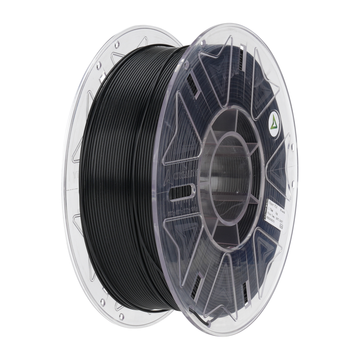
Not all PLA is of the same quality. With a PLA filament 3D printer, your printing success depends on filament that is consistent in diameter and composition. With some cheap brands, you may encounter problems, such as clogs in your nozzle or prints that fail due to irregularities. Therefore, it is advisable to choose a reliable manufacturer, where you know the diameter is stable (e.g., 1.75 mm ± 0.02 mm) and that it contains no impurities. This way, you have less to worry about regarding jams and warped prints. You can also experiment with special PLA variants, such as wood or metal-like finishes, but these sometimes require a little more knowledge of your printer settings.
Playing with temperature and bed settings
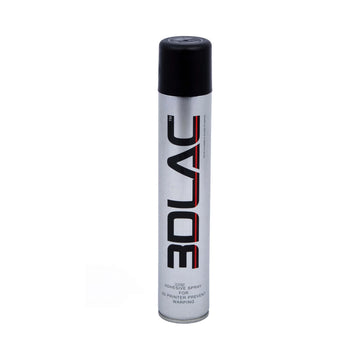
A PLA filament 3D printer is forgiving, but some fine-tuning can work wonders. Start around a 200°C printing temperature and see if the layers bond neatly. Is there any “stringing” (threads between parts)? Then you can lower the temperature slightly or adjust the retraction settings. For the print bed, 50°C to 60°C is generally enough, although the ideal values vary by brand and type of PLA. Is your print having trouble sticking to the bed? Then a thin layer of glue stick or special adhesive spray can be a solution. Small tweaks often make a big difference in your final print quality.
Less odor, fewer worries
With some 3D printing materials, the smell during printing is so strong that you want to ventilate continuously. With PLA, that is much less the case. A PLA filament 3D printer usually only releases a light, sweet odor, which is not bothersome for most people. This makes PLA feel more pleasant and safer, especially in small rooms or if children are nearby. Of course, it remains wise not to seal the room hermetically, but you don't have to worry about harsh fumes that could harm your health. This makes PLA particularly suitable for home or school.
Strong enough for many projects
Although PLA is not known as the most heat-resistant or super-strong filament, it is robust enough for many practical applications. Especially when you ensure the right infill and wall thickness, PLA parts can withstand quite a bit. A PLA filament 3D printer is therefore not just for decorative projects, but also for useful, everyday objects that are not subjected to extreme conditions. Do you want to print something that can withstand high temperatures or heavy forces? Then you are better off looking at alternatives like ABS or PETG. But for the vast majority of 3D printing tasks, PLA is a great material.
AC PRODUCTS: We help you get started
At AC PRODUCTS, we believe that a PLA filament 3D printer is not only convenient but also contributes to a more responsible 3D printing process. Because PLA comes from renewable sources and releases little to no unpleasant fumes, it is a sustainable and practical choice. We are happy to advise you on which printer works best with PLA, which filament brands are reliable, and which settings you can use. Whether you are an entrepreneur who wants to make quick prototypes or a hobbyist who prints jewelry, we have the knowledge to support you. Feel free to keep experimenting—there are always new types of PLA to discover, such as blends with wood, metal, or extra heat resistance.
Conclusion: Simple, sustainable, and versatile
In short, printing with a PLA filament 3D printer has all sorts of advantages. The material is relatively eco-friendly, you don't have to worry about pungent odors, and it is easy to configure, even if you don't have much experience with 3D printing yet. Moreover, PLA is suitable for a wide range of projects: from decorative objects to functional parts that do not have to perform under extreme conditions. When purchasing filament, do keep quality in mind so that you don't run into problems with your prints. Do you have questions about printers, filament, or settings? The experts at AC PRODUCTS are ready to provide you with advice and guidance so that you can fully enjoy your PLA adventure.


Leave a comment