


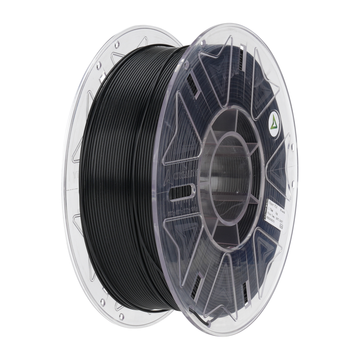
You want to produce more sustainably without compromising on dimensional accuracy, surface quality, and predictability. This is possible, provided you are mindful of your choice of materials, settings, and post-processing. With PLA filament 3D printing, you are closer to eco-friendly printing than you think, precisely because the material combines low printing temperatures, good dimensional stability, and a neat finish with a plant-based origin. It does not require exotic upgrades, but rather a sensible recipe that you apply consistently.
What “eco-friendly” means in practice
Eco-friendliness is not a slogan but a sum of choices. PLA comes from renewable sources and prints at lower temperatures than many alternatives. That means less energy per part and less scrap due to warping. With PLA filament 3D printing, you directly reduce material and energy waste, especially for prototypes, housings, and jigs that do not need to withstand high operating temperatures. Please note the context: industrial composting is not the same as home compostable. Therefore, opt for long-term use, repair, and, if necessary, controlled recycling. This keeps the sustainability narrative honest and effective.
Quality without compromise
Quality is visible in sharp corners, clean walls, and a consistent line appearance. PLA delivers this relatively easily. The low shrinkage keeps dimensions predictable and makes tight tolerances more achievable than with many other materials. For functional parts that heat up, PETG or ASA sometimes make more sense, but for the majority of visual work and aids, you achieve a high aesthetic level with PLA filament 3D printing without heavy post-processing. The secret lies in the first layer, cooling, and a calm, repeatable process.
Settings that work
Start with a stable bed and a clean nozzle. Calibrate the Z-offset accurately and choose a layer height that suits your goal: 0.16 to 0.24 millimeters is often the sweet spot for clean walls without long print times. PLA likes sufficient part cooling, especially for bridges and small details. Too much air, however, can lead to weaker layer adhesion. With PLA filament 3D printing, the game is simple: a slightly higher nozzle temperature for strong joints, a little more cooling for sharp edges. Work in small steps and change one parameter at a time; this builds evidence instead of assumptions.
Design choices that make the difference
Orient parts so that the most important forces fall along the fiber direction and keep walls as uniform as possible. Avoid unnecessary supports through smart orientation and small chamfers. Rounded internal corners distribute stress better than sharp ones. With PLA filament 3D printing, this basic knowledge quickly pays off in parts that not only look good but also assemble neatly. For snap-fit tabs, an extra perimeter helps more than a high infill; for dowel pins, printing vertically with sufficient perimeters is often more accurate than horizontally with support.
The only checklist you need
- First layer as a foundation. Perfect adhesion and a flat bed provide the biggest quality dividend.
- Temperature and cooling in balance. Increase the nozzle by 5 degrees for adhesion, or increase cooling for detail.
- Calibrate flow per nozzle size. Single-wall test piece, measure, document.
- Limit support by orientation. Less support means less post-processing and a cleaner line appearance.
- Store dry. PLA is forgiving, but dry material extrudes cleaner and more consistently.
With this list, you get consistently clean results from PLA filament 3D printing without endless tweaking.
Less waste, higher yield
Scrap is the biggest waste factor. Because PLA shrinks little and prints predictably, the number of failed jobs drops. Combine this with scrap management: save short pieces for small parts, use a purge block with limited dimensions, and reconsider support density. In many designs, you can save 30 to 60 percent on support by orienting smartly. Every gram that isn't needed lowers costs and impact. With PLA filament 3D printing, that optimization is accessible because you are not fighting material quirks.
Applications that score
Presentation models, aesthetic covers, spacing blocks, assembly jigs, and lightly loaded housings are typical winners. The line appearance is clean, the dimensional accuracy is good, and the post-processing is light. For outdoor use or higher temperatures, a material change makes sense, but do not underestimate the range. In many assembly and logistics tools, PLA filament 3D printing is accurate enough, strong enough, and above all, fast enough. That is where sustainability and productivity meet: less waste, less energy, and yet parts that do what they are supposed to do.
Common misconceptions
A persistent thought is that PLA is "weak." In pure tension or with thin tabs, it may be more brittle than PETG, but in designs with sufficient perimeters and proper orientation, it performs excellently. A second misconception is that PLA always reacts poorly to heat. Reality is more nuanced: within normal room temperatures, a well-printed part holds up fine. Test your case, but do not reflexively choose heavier materials. With PLA filament 3D printing, you often avoid unnecessary energy and time investments.
AC PRODUCTS as a partner
You don't have to work by feel. AC PRODUCTS helps you with material selection, nozzle strategies, and recipe development. We translate your application into a concrete plan: orientation advice, starting profiles per layer height, drying and storage tips, and compact quality checks that you integrate into your workflow. This way, you get the most out of PLA filament 3D printing without your team getting lost in variants and exceptions. If you have parts that fall just outside the comfort zone, we will advise you when it is time to switch to another material, including the corresponding settings.
Summary and next step
Sustainable printing without loss of quality requires three things: an honest material, a stable recipe, and an organization that documents knowledge. PLA fits that profile. With low temperatures, little shrinkage, and a clean line appearance, PLA filament 3D printing offers you a short route to neat parts with a small footprint. Start with the first layer, secure temperature and cooling, limit support, and document your working recipes. If you want us to review, fine-tune, or train your team, AC PRODUCTS is ready with practical help and proven profiles. This way, eco-friendly printing becomes not just a promise, but your daily practice.


Leave a comment