


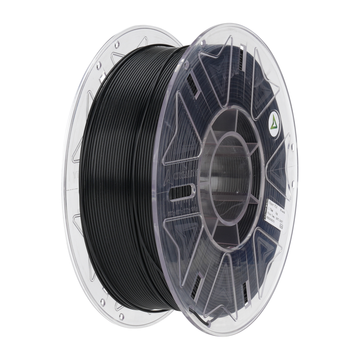
You want parts that look sleek, are dimensionally accurate, and deliver the same result on every printer. Colors should be spot-on, edges should remain clean, and repeat prints should look as if they were made in a single batch. That is exactly where Polymaker distinguishes itself in daily practice. The combination of consistent raw materials, careful pigmentation, and tight tolerances results in a filament that prints predictably and is visually convincing. You will notice the effect not only in a beautiful surface finish but, more importantly, in less post-processing, fewer rejects, and a shorter lead time from design to usable part. Anyone seeking professionalism without endless fine-tuning will find in Polymaker a logical foundation for more serious work.
What you see and what you don't
Detail starts with controlled extrusion. A stable diameter and roundness ensure that the actual flow matches what you set in the slicer. As a result, lines remain consistent and sharp corners are not printed "overfull." The visible result is an even gloss or an uniform matte skin, depending on the chosen material. What you don't see but do feel: click-fit connections fit more consistently, mating parts interlock predictably, and thin walls remain straight. Polymaker builds that predictability in with batch control and clear profile suggestions, so you rarely have to guess where a deviation comes from.
Material choice per application
Not every part has the same requirements. It is wise to link material choice to function and environment. For quick form studies and aesthetic parts, a modern PLA variant is logical: low risk, sharp details, and low warping tendency. If you work outdoors or need a sturdier utility part, PETG is a natural step with more toughness and better moisture resistance. For weather, wind, and UV, ASA is preferred, especially for signage or outdoor clips. ABS remains relevant for functional parts that you want to post-process or mount with heat. If you need higher temperature resistance or impact strength, a technical family comes into play such as PC blends or nylon blends. Flexible parts require a TPU with a consistent Shore value. By clearly positioning its material lines, Polymaker makes it easy to scale up from aesthetic to functional without having to overhaul your entire profile library.
Detail in practice: Edges, holes, and bridges
Sharp outer edges lose detail when flow fluctuates or the material remains too "syrupy." With stable viscosity per temperature window, chamfers and fillets remain sharp, which you see immediately in product photos and snap-fits. Inner contours of holes have the same advantage: less elliptical distortion, rounder after cooling. Bridges benefit from consistent curing: lines sag less, so you sand and drill less afterwards. In production terms, that simply means less manual labor. Polymaker lets you spend more time on design and less on correction.
Productivity: Predictability is the real gain
A spool that behaves reliably not only prints better but, above all, faster per realized part. Fewer failed first layers, fewer spaghetti runs, fewer coils in the dryer because you are doubting where things are going wrong. Every error avoided is an hour gained. In a small studio or educational environment, that counts just as much as in an SME's prototyping cell. With Polymaker, the success rate of the first run increases, and especially the repeatability of the second, third, and tenth. You notice that in planning and in confidence: you dare to let larger tasks run at night because you expect fewer surprises.
Workflow that grows with your team
The utility of a good filament doubles when profiles and routines are clear. Work with material profiles that you save per project, measure critical dimensions, and briefly record what you adjusted if changes are made. The supplier's profile suggestions are a good starting point, but your application decides. Keep the first layer conservative for safety, then increase speed step by step for large surfaces and decrease it for small features. Polymaker visibly benefits from such a disciplined workflow: the material behaves as if it knows your machine, while you meanwhile pick up the pace with less fine-tuning.
One-time checklist for the first profile
This is the only list in this article and is intended as a compact starting point.
- Choose one nozzle size for your first series and start with 0.2 mm layer height.
- Calibrate Z-offset with a small first-layer pattern and note the value.
- Start with the recommended nozzle and bed temperatures and correct in 5-degree increments.
- Set perimeters to 3 for functional parts and keep infill below 30 percent where possible.
- Print critical mating parts in identical orientation for comparable shrinkage.
- Dry hygroscopic materials beforehand and store spools with desiccant.
- Record per project: material, temperature, speed, fan setting, and result.
Aesthetics and post-processing
Sometimes a part needs to look like an injection-molded piece. If you choose a matte PLA or PETG variant, layer lines disappear visually faster, especially on slanted surfaces. For paint or primer, an even skin is important; you achieve that with stable extrusion and carefully profiled cooling. Because Polymaker flows consistently within the set window, wet-sanding works more predictably and a primer coat absorbs more evenly. Result: fewer layers, higher coverage, and a more professional final impression.
Short usage tips per material family
For quick concepts and show models, a modern PLA is ideal. If you want a part that can take a beating and can go outside, PETG gives you a good mix of toughness and printability. For UV and weather resistance, choose ASA; for ease-of-processing functionality, choose ABS. If you need higher temperature or impact, PC and nylon blends are the next step. A solid TPU is useful for dampers, clamps, and protective edges. In all these cases, the pattern remains the same: start with a conservative profile, make one change per run, and document. Polymaker rewards that discipline with stable, clean results that you dare to repeat.
Summary: A print that looks exactly as you intended
Those who are done with guessing and prefer designing over correcting choose a filament that performs predictably, colors neatly, and looks professional. Polymaker delivers exactly that: consistent flow, reliable pigmentation, and repeatable dimensions. The result is less scrap, less post-processing, and more confidence in every next run. Combined with a tight workflow and good storage, you get the most out of your printers, whether you make one prototype per week or run a small batch every day. If you want to scale up quietly without surprises, Polymaker is a premium choice that proves its added value with every print.
More details and products can be found at AC PRODUCTS.


Leave a comment