


You are about to open up a new world: ideas that were just in your head this morning can be on your table as tangible prototypes by tonight. With a 3D printer for beginners, you can iterate faster, create convincing visual models, and even print small functional tools. However, the risk of frustration is real if you start without a plan. In this guide, you will receive practical, proven advice to keep your learning curve short, minimize misprints, and enjoy your setup and get results from day one. Everything is in plain language, focused on reliable outcomes rather than endless tweaking.
Why a strong foundation makes the difference
Think of it like cooking. With good tools, clean cutting boards, and a simple recipe, almost anyone can produce an excellent result. Three ingredients determine your first few months. One: dry, predictable PLA or PETG that suits your application. Two: a stable, draft-free spot for the machine, with a clean, level bed and a constant ambient temperature. Three: a minimalist workflow—a few fixed steps that you always repeat. If you get those three things right from the start, a 3D printer for beginners won't feel like a toy for experimentation, but like a reliable production tool.
How to go from ‘first print’ to ‘reliable production’
The leap from a fun test object to a part you can always reproduce lies in rhythm. Choose one evening a week for short iterations: the same model in two orientations, a wall slightly thicker, a different seam placement. Briefly note what improves and why. After four such sessions, you will have a small library of your ‘own’ settings and tricks. You will notice that you barely have to ‘guess’ anymore. This is how it works with any tool, and certainly with a 3D printer for beginners: you build your own craftsmanship in small steps.
Common mistakes (and quick remedies)
- Trying to tune everything at once. Results become unpredictable if you change three settings simultaneously. Remedy: one variable per test.
- Misusing infill. A solid interior does not compensate for poor walls. Set walls and orientation correctly first; only then adjust the infill.
- Cold, drafty corner. Warm first layers and a calm environment do wonders. Move the printer or shield it off.
- Support everywhere. Design overhangs with 45° rules and let critical surfaces finish on the bed. Less support is almost always nicer and stronger.
- Unlabeled filament. Keep track of brand, material, and color. Repeatable quality starts with traceable sources.
Even with those pitfalls in mind, discovery remains fun. Plan one ‘play-print’ a month where you consciously try something new (a flexible TPU, a composite, or a matte blend). You will sharpen your skills while your daily prints continue to roll in with your fixed profile. This is how a 3D printer for beginners grows with you without disrupting your baseline.
Material choice: When do you step up?
PLA is your best friend for aesthetics and prototyping. If the part gets warm (car interior, sun), takes a beating, or needs to hang outside, switch to PETG (tough, slightly more flexible) or ASA (UV-resistant) and ensure a stable print climate. Nylon is fantastic for wear resistance, but requires dry storage and experience. The beauty is: the logic remains the same. You apply the same first-layer discipline and design tricks, just with slightly different temperatures and cooling. With that mindset, a 3D printer for beginners never feels limiting, but rather a stepping stone to more serious work.
Workflow that gives you back time
Work ‘from back to front.’ Start with the function of your part, establish the measurement and fit requirements, choose the material, and only then set the printer settings. Export cleanly (e.g., 0.1 mm facet resolution for organic shapes) and check your STL for non-manifold errors before opening the slicer. Use labels in your filenames (project material nozzle version.gcode). It sounds pedantic, but you will save minutes every week that would otherwise disappear into searching and guessing. This is how you turn a 3D printer for beginners into a serious colleague in your process.
Safety & responsibility
3D printing involves thermal and electrical work. Follow the manufacturer’s recommendations, use grounded outlets, do not pull cables tight, and replace worn nozzles and PTFE liners in time. If you print a lot, ensure ventilation and pay attention to emissions from specific materials. Working safely is not a brake on creativity; it is the prerequisite for enjoying it for a long time—especially when you are just starting with a 3D printer for beginners and exploring the limits of what is possible.
How AC PRODUCTS gets you up to speed faster
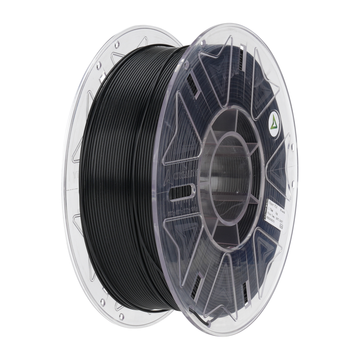
Material, machine, and environment must work together. At AC PRODUCTS, you don’t get a ‘DIY and good luck’ package, but a compact set of starter profiles per filament, advice on storage, and a short ‘first-layer-check’ that you can repeat every time. We help you think through nozzle choice, build plates (glass, PEI, textured), cooling strategy, and simple test models to validate your setup. If you work with PETG, ASA, or fiber-reinforced blends later, we build on what you have already mastered so that your 3D printer for beginners feels like a logical, solid base rather than a temporary step.
Conclusion: Start small, win consistently
Showpiece prints are nice for photos, but it is predictability that truly makes your print work valuable. Choose dry, reliable material; make the first layer sacred; design for the process; work with one clean base profile; and maintain it in small but consistent ways. With those five habits, a 3D printer for beginners turns into a machine you can rely on every week for prototypes, fit tests, and even light functional parts.
Check out our extensive range and get inspired by AC PRODUCTS.


Leave a comment