


You know the moment when a sketch suddenly clicks, but you want to feel it, rotate it, test it. With a 3D printer, you reduce the step from concept to tangible model to hours instead of weeks. You validate an ergonomic grip, check a snap-fit connection, and refine geometry without being dependent on external lead times. The result is more iterations per sprint and decisions based on real feedback. Small imperfections you didn't see on the screen stand out in your hand. This is how the design not only grows faster, but is also better substantiated.
Precision and dimensional accuracy where it counts
For engineers, dimensional accuracy, tolerances, and repeatability matter. Modern systems deliver clean layer lines, predictable wall thickness, and neat concentricity, provided calibration and material selection are correct. Tight fits for a bearing, snap-fit tabs that don't break, a screw thread that feels as intended—it is achievable when the 3D printer is correctly adjusted. Moreover, you benefit from test pieces for critical dimensions. A short measurement cycle with calipers or CMM shows whether you can still gain improvements in nozzle, flow, or cooling before you print your final housing or fixture.
Material selection that follows the application
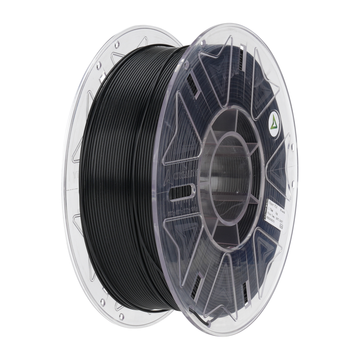
Not every component requires the same material. PLA presents cleanly and is easy to print, PETG combines toughness with chemical resistance, ASA can be used outdoors, and PC and PA bridge the gap to real functional loads. By deliberately building your material library, you turn the 3D printer into a workbench that covers a wide range of requirements. Think of odorless prints for the office, electrically insulating brackets, or temporary grippers that can take a beating. The key is to measure, record, and maintain a fixed recipe per material so that teams work consistently.
Balancing costs and lead time
The discussion is often about piece price, but the real gain lies in lead time and risk management. An internal print prevents wait times, rush costs, and failure costs due to late insights. In terms of total cost of ownership, the 3D printer counts as an accelerator for decision-making. You test early, fail small, and choose an end process like injection molding or CNC with more certainty. Spare parts in small series also gain significance; think of a sensor holder that is needed five times a year. By printing locally, you keep inventory lean while maintaining delivery reliability.
Prototypes that present and perform
A prototype must convince in the boardroom and function in the test setup. With the right nozzle, layer height, and post-processing, you get a show model and a test part from the same machine. Sharp relief for branding, neat radii for hygiene, a click that sounds as intended. The 3D printer thus becomes a bridge between design and engineering. You show customers what they will eventually receive, and you prove internally that the design withstands the process. Small series for pilot use provide data back from practice instead of just from simulation.
Design for additive: Utilizing new freedoms
Designing for additive manufacturing requires a different perspective. Hollow chambers for weight reduction, integrated cable routing, and grid structures for stiffness at low weight become within reach without extra tools. If you work parametrically, you align wall thicknesses, ribs, and infill with the dominant load directions. In this way, fabrication changes from a series of separate operations into one integrated component. In assembly, you see the effect: fewer screws, shorter tolerance chains, and less chance of errors during assembly.
Workflow and quality: From CAD to print without noise
A strong workflow prevents quality from being a matter of coincidence. You work in fixed steps and keep room for sensible checks before the bed heats up. The 3D printer fits seamlessly into this when the chain is correct from design to final inspection. A short, practical checklist helps you with this:
- Check watertight geometry, scale, and orientation immediately after slicing.
- Calibrate first layer, Z-offset, and bed level and log the settings per material.
- Choose cooling and temperature based on component type, not just on the material label.
- Limit support by smart orientation, use tree-support where appropriate.
- Validate a critical dimension on a test part before starting the full batch.
- Note version, nozzle, and batch number on the part or label for traceability.
This routine takes little time and results in repeatability. This way, the 3D printer not only prints beautifully today, but predictably tomorrow.
Scalable within team and chain
One machine is often the start, and several soon follow. With shared profiles, certified materials, and clear naming conventions, you maintain control. The 3D printer then becomes a network of capable stations, possibly distributed across locations. You swap roles without surprises, planning remains clear, and urgent jobs fit in between. This also works toward suppliers, because you share STL or STEP files with settings and reference photos. Everyone is looking at the same thing, and errors due to misinterpretation disappear into the background.
AC PRODUCTS as a partner in every phase
You don't have to reinvent the wheel alone. AC PRODUCTS helps you with machine selection, nozzle configurations, material advice, storage, and maintenance. We set up profiles together, train teams, and create a plan for service and replacement parts. This allows you to get the most out of your 3D printer within the context of your work processes. If you need a scaling plan or validation of critical components, we provide measurement reports and practical tests. You don't get a general promise; you get a concrete method that fits your goals and budget. The 3D printer thus grows from prototyping to serious production support, reliably and with clear quality agreements.


Leave a comment